Enshittification, and what comes after it
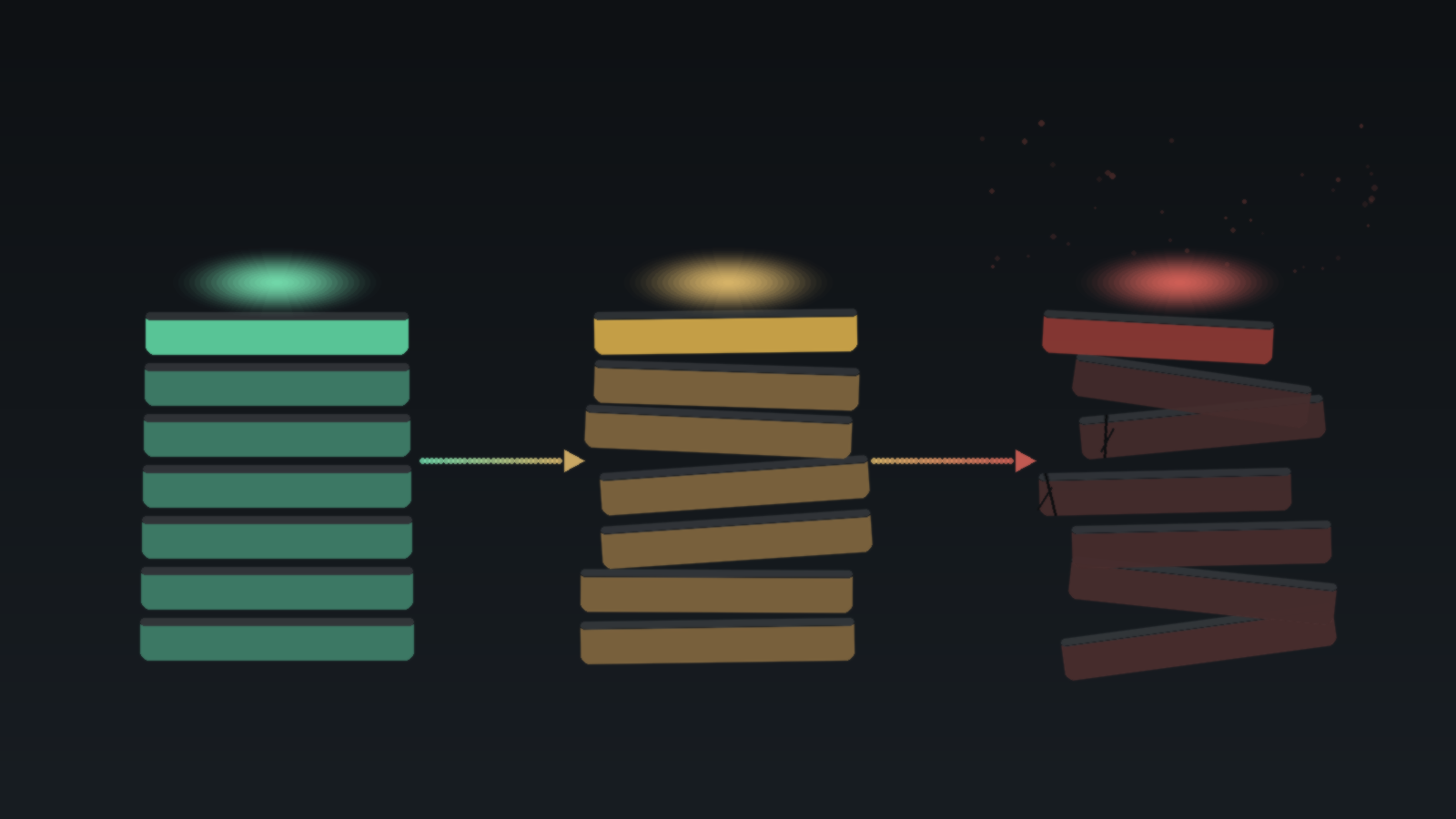
I've been online, in one form or another, since the mid-90s. Long enough to remember when a platform going downhill felt like a genuine surprise, almost a betrayal. These days it barely registers - a beloved app gets an update, and within a year it's worse in every way that matters, and we all just... shrug, and keep using it anyway, because where else would we go.
There's a word for that now, and I have to admit I quite like it, in a slightly guilty way: enshittification. Cory Doctorow coined it in a blog post in November 2022, and it caught on fast enough that the American Dialect Society made it their Word of the Year for 2023. Which tells you something about how many people recognised the pattern the moment they heard the name for it.
The three stages
Doctorow's version of the theory goes like this, more or less in his own words: platforms are good to their users first, in order to lock them in. Then they start abusing those users a little, to make things better for their business customers - the advertisers, the merchants, the creators who depend on the platform for reach. Then, once everyone (users and business customers both) is thoroughly locked in and has nowhere else to go, the platform starts abusing everyone, to claw back as much value as possible for itself and its shareholders. Then, in Doctorow's telling, it dies.
You can watch this happen in real time on more or less any platform you can name. Search results get worse and stuffed with sponsored junk. Reels and Shorts get pushed over the content you actually followed people for. A feed that used to show you your friends now mostly shows you things you never asked for, wrapped around ads you definitely never asked for.
This is where my last piece fits in
Which brings me back to the piece I wrote just before this one, about why your feed seems engineered to make you angry. At the time I framed that as an algorithm problem - engagement-maximising systems, no sense of right or wrong, chasing whatever keeps you scrolling.
I still think that's true, but writing this piece made me realise it's really a symptom, not the disease. Rewarding outrage isn't some independent, freestanding algorithmic quirk. It's exactly what you'd expect to see once a platform hits Doctorow's second or third stage - once the thing being optimised for is no longer "does this serve the user" but "does this extract the most value for the business and its shareholders." Outrage is cheap to produce, extremely engaging, and keeps people on the app long enough to see one more ad. Of course it gets rewarded. It's not a bug in an otherwise well-meaning system - it's the system doing exactly what stage-three enshittification asks of it.
Put the two pieces together and you get a fuller picture: negativity bias is the symptom you feel scrolling through your phone. Enshittification is the disease underneath it, the business model that makes that symptom not just likely but close to inevitable.
So what do you actually do about it
Doctorow's own answer, in his talks and in the book, leans heavily on structural fixes - antitrust enforcement, interoperability, the right to actually leave a platform without losing everything you built on it. Those are real levers, and bigger ones than anything I can pull personally. But I wanted to try something smaller and more personal too, which is where Positron comes in.
A while back I started Positron Today as a small, deliberately non-commercial project - a multilingual, AI-summarised positive news site, available in English, Dutch and French. Non-commercial wasn't an afterthought, it was the whole point. There's no advertising to optimise for, no engagement metric anyone is trying to maximise, no shareholders waiting for a bigger number next quarter. I even went back and restructured the homepage to link straight through to the original publishers, rather than trying to keep anyone parked on my own site - which is, if you think about it, the exact opposite instinct from stage-two enshittification, where you'd normally want to trap people in your own feed for as long as possible.
Is Positron a solution to enshittification? Of course not, don't be silly, it's one guy in Antwerp with a hobby project. But it's a genuine, working answer to the question "what would this look like if nobody was trying to extract value from you at every step" - and I think that question is worth more small, honest experiments, not fewer. If enough of us build small things that refuse to enshittify on principle, that's not nothing.
If you want to see what that looks like in practice, go have a browse. And if you've got your own small non-commercial thing going, one you built because you got tired of watching a platform you loved get worse, I'd genuinely love to hear about it.
Some further reading, if this pulled you in the way it pulled me in:
Cheers / Rik
Enshittification, en wat daarna komt
Ik ben online, in een of andere vorm, sinds het midden van de jaren '90. Lang genoeg om me te herinneren dat een platform dat achteruitging als een oprechte verrassing voelde, bijna als een verraad. Tegenwoordig registreert het nauwelijks - een geliefde app krijgt een update, en binnen een jaar is het op elke manier die ertoe doet slechter, en we allemaal gewoon... schouders ophalen, en blijven het toch gebruiken, omdat waar zouden we anders heen gaan.
Er is nu een woord voor, en ik moet toegeven dat ik het best leuk vind, op een licht schuldige manier: enshittification. Cory Doctorow bedacht het in een blogpost in november 2022, en het verspreidde zich snel genoeg dat de American Dialect Society het tot hun Woord van het Jaar voor 2023 maakte. Dat zegt je iets over hoeveel mensen het patroon herkenden op het moment dat ze de naam ervoor hoorden.
De drie stadia
Doctorow's versie van de theorie gaat ongeveer zo, meer of minder in zijn eigen woorden: platforms zijn eerst goed voor hun gebruikers, om ze vast te zetten. Dan beginnen ze die gebruikers een beetje te misbruiken, om dingen beter te maken voor hun zakelijke klanten - de adverteerders, de handelaren, de makers die afhankelijk zijn van het platform voor bereik. Dan, zodra iedereen (zowel gebruikers als zakelijke klanten) grondig vastzit en nergens anders heen kan, begint het platform iedereen te misbruiken, om zoveel mogelijk waarde voor zichzelf en zijn aandeelhouders terug te winnen. Dan, in Doctorow's verhaal, sterft het.
Je kunt dit in real-time zien gebeuren op meer of minder elk platform dat je kunt noemen. Zoekresultaten worden slechter en volgestopt met gesponsorde rommel. Reels en Shorts worden opgedrongen boven de inhoud waarvoor je mensen daadwerkelijk volgde. Een feed die vroeger je vrienden toonde, laat nu voornamelijk dingen zien die je nooit hebt gevraagd, omgeven door advertenties die je zeker nooit hebt gevraagd.
Dit is waar mijn laatste stuk in past
Dat brengt me terug bij het stuk dat ik net voor deze schreef, over waarom je feed lijkt te zijn ontworpen om je boos te maken. Op dat moment kaderde ik dat als een algoritmeprobleem - engagement-maximaliserende systemen, geen gevoel van goed of fout, achtervolgend wat je aan het scrollen houdt.
Ik denk nog steeds dat dat waar is, maar het schrijven van dit stuk deed me realiseren dat het eigenlijk een symptoom is, niet de ziekte. Het belonen van verontwaardiging is geen onafhankelijke, op zichzelf staande algoritmische eigenaardigheid. Het is precies wat je zou verwachten te zien zodra een platform Doctorow's tweede of derde stadium bereikt - zodra het ding dat geoptimaliseerd wordt niet langer "dient dit de gebruiker" is, maar "haalt dit de meeste waarde voor het bedrijf en zijn aandeelhouders eruit." Verontwaardiging is goedkoop te produceren, extreem boeiend, en houdt mensen lang genoeg op de app om nog een advertentie te zien. Natuurlijk wordt het beloond. Het is geen bug in een anderszins goedbedoeld systeem - het is het systeem dat precies doet wat stadium-drie enshittification van het hem vraagt.
Als je de twee stukken samenvoegt, krijg je een vollediger beeld: negativiteitsbias is het symptoom dat je voelt terwijl je door je telefoon scrolt. Enshittification is de ziekte eronder, het businessmodel dat dat symptoom niet alleen waarschijnlijk maar bijna onvermijdelijk maakt.
Dus wat doe je er eigenlijk aan
Doctorow's eigen antwoord, in zijn lezingen en in het boek, leunt zwaar op structurele oplossingen - handhaving van mededingingswetgeving, interoperabiliteit, het recht om daadwerkelijk een platform te verlaten zonder alles te verliezen wat je erop hebt opgebouwd. Dat zijn echte hefboomwerking, en grotere dan wat ik persoonlijk kan doen. Maar ik wilde ook iets kleins en persoonlijkers proberen, en daar komt Positron om de hoek kijken.
Een tijdje geleden begon ik Positron Today als een klein, opzettelijk niet-commercieel project - een meertalige, door AI samengevatte positieve nieuwssite, beschikbaar in het Engels, Nederlands en Frans. Niet-commercieel was geen bijgedachte, het was het hele punt. Er is geen reclame om voor te optimaliseren, geen engagement-metric waar iemand probeert te maximaliseren, geen aandeelhouders die wachten op een groter getal volgend kwartaal. Ik ging zelfs terug en herschikte de homepage om rechtstreekse links naar de oorspronkelijke uitgevers te maken, in plaats van te proberen iemand op mijn eigen site te houden - wat, als je erover nadenkt, het exacte tegenovergestelde instinct is van stadium-twee enshittification, waar je normaal gesproken mensen zo lang mogelijk in je eigen feed wilt vasthouden.
Is Positron een oplossing voor enshittification? Natuurlijk niet, wees niet belachelijk, het is één man in Antwerpen met een hobbyproject. Maar het is een oprechte, werkende antwoord op de vraag "hoe zou dit eruitzien als niemand elke stap waarde van je probeert te onttrekken" - en ik denk dat die vraag meer kleine, eerlijke experimenten waard is, niet minder. Als genoeg van ons kleine dingen bouwen die principieel weigeren te enshittificeren, is dat niet niets.
Als je wilt zien hoe dat er in de praktijk uitziet, ga dan eens rondkijken. En als je je eigen kleine niet-commerciële project hebt, eentje die je hebt gebouwd omdat je moe was van het zien van een platform dat je leuk vond slechter worden, zou ik oprecht graag horen over wat je hebt gemaakt.
Enkele verdere lectuur, als dit je heeft aangetrokken zoals het mij aantrok:
Proost / Rik
Enshittification, et ce qui vient après
Je suis en ligne, sous une forme ou une autre, depuis le milieu des années 90. Assez longtemps pour me souvenir qu'une plateforme qui se dégrade semblait être une véritable surprise, presque une trahison. De nos jours, cela ne fait presque plus de bruit - une application adorée reçoit une mise à jour, et en moins d'un an, elle est pire à tous les égards qui comptent, et nous... haussent les épaules, et continuons à l'utiliser de toute façon, parce que où irions-nous d'autre.
Il y a maintenant un mot pour cela, et je dois admettre que je l'aime bien, d'une manière légèrement coupable : enshittification. Cory Doctorow l'a inventé dans un article de blog en novembre 2022, et il a été adopté si rapidement que l'American Dialect Society en a fait son Mot de l'Année pour 2023. Ce qui vous dit quelque chose sur le nombre de personnes qui ont reconnu le schéma au moment où elles ont entendu le nom.
Les trois étapes
La version de Doctorow de la théorie se présente comme suit, plus ou moins dans ses propres mots : les plateformes sont d'abord bonnes avec leurs utilisateurs, afin de les enfermer. Ensuite, elles commencent à abuser un peu de ces utilisateurs, pour améliorer les choses pour leurs clients commerciaux - les annonceurs, les commerçants, les créateurs qui dépendent de la plateforme pour leur portée. Puis, une fois que tout le monde (utilisateurs et clients commerciaux) est complètement enfermé et n'a nulle part où aller, la plateforme commence à abuser de tout le monde, pour récupérer autant de valeur que possible pour elle-même et ses actionnaires. Ensuite, dans le récit de Doctorow, elle meurt.
Vous pouvez voir cela se produire en temps réel sur presque n'importe quelle plateforme que vous pouvez nommer. Les résultats de recherche deviennent pires et sont remplis de contenus sponsorisés. Les Reels et Shorts sont poussés au-dessus du contenu pour lequel vous avez réellement suivi des personnes. Un fil qui vous montrait vos amis montre maintenant principalement des choses que vous n'avez jamais demandées, entourées de publicités que vous n'avez définitivement jamais demandées.
C'est ici que s'inscrit mon dernier article
Ce qui me ramène à l'article que j'ai écrit juste avant celui-ci, sur pourquoi votre fil semble conçu pour vous rendre en colère. À l'époque, je l'avais présenté comme un problème d'algorithme - des systèmes maximisant l'engagement, sans sens du bien ou du mal, poursuivant tout ce qui vous garde à faire défiler.
Je pense toujours que c'est vrai, mais écrire cet article m'a fait réaliser que c'est vraiment un symptôme, pas la maladie. Récompenser l'indignation n'est pas une bizarrerie algorithmique indépendante et autonome. C'est exactement ce que vous vous attendez à voir une fois qu'une plateforme atteint la deuxième ou la troisième étape de Doctorow - une fois que ce qui est optimisé n'est plus "est-ce que cela sert l'utilisateur" mais "est-ce que cela extrait le plus de valeur pour l'entreprise et ses actionnaires." L'indignation est bon marché à produire, extrêmement engageante, et garde les gens sur l'application assez longtemps pour voir une publicité de plus. Bien sûr, elle est récompensée. Ce n'est pas un bug dans un système par ailleurs bien intentionné - c'est le système faisant exactement ce que la troisième étape de l'enshittification lui demande.
Mettez les deux articles ensemble et vous obtenez une image plus complète : le biais de négativité est le symptôme que vous ressentez en faisant défiler votre téléphone. L'enshittification est la maladie sous-jacente, le modèle commercial qui rend ce symptôme non seulement probable mais presque inévitable.
Alors, que faites-vous réellement à ce sujet
La propre réponse de Doctorow, dans ses discours et dans le livre, s'appuie fortement sur des solutions structurelles - l'application des lois antitrust, l'interopérabilité, le droit de quitter réellement une plateforme sans perdre tout ce que vous y avez construit. Ce sont de véritables leviers, et plus grands que tout ce que je peux tirer personnellement. Mais je voulais aussi essayer quelque chose de plus petit et de plus personnel, c'est là que Positron entre en jeu.
Il y a quelque temps, j'ai lancé Positron Today comme un petit projet délibérément non commercial - un site d'actualités positives multilingue, résumé par IA, disponible en anglais, néerlandais et français. Le non-commercial n'était pas une réflexion après coup, c'était le but même. Il n'y a pas de publicité à optimiser, pas de métrique d'engagement que quiconque essaie de maximiser, pas d'actionnaires attendant un plus gros chiffre le trimestre prochain. J'ai même refait la page d'accueil pour faire un lien direct vers les éditeurs originaux, plutôt que d'essayer de garder quelqu'un sur mon propre site - ce qui est, si vous y pensez, l'exact opposé de l'instinct de la deuxième étape de l'enshittification, où vous voudriez normalement piéger les gens dans votre propre fil le plus longtemps possible.
Positron est-il une solution à l'enshittification ? Bien sûr que non, ne soyez pas ridicule, c'est un gars à Anvers avec un projet de loisir. Mais c'est une véritable réponse fonctionnelle à la question "à quoi cela ressemblerait-il si personne n'essayait d'extraire de la valeur de vous à chaque étape" - et je pense que cette question mérite plus de petites expériences honnêtes, pas moins. Si suffisamment d'entre nous construisent de petites choses qui refusent de s'enshittifier par principe, ce n'est pas rien.
Si vous voulez voir à quoi cela ressemble en pratique, allez faire un tour. Et si vous avez votre propre petite chose non commerciale, que vous avez construite parce que vous en aviez assez de voir une plateforme que vous aimiez se dégrader, j'aimerais vraiment en entendre parler.
Quelques lectures supplémentaires, si cela vous a attiré comme cela m'a attiré :
Santé / Rik