The positron principle: why good news is real news you just never see
A few weeks ago I was having coffee with a friend, and somewhere between the first and second cup she said something that stuck with me. "I've basically stopped reading the news," she said. "It just makes me feel terrible, and then I feel guilty for not knowing what's going on." And here's the thing - she's not lazy, or shallow, or hiding from the world. She's one of the most engaged, curious people I know. She had just quietly decided that the daily news was doing her more harm than good.
I've heard some version of that sentence from a lot of people lately. And every time, I have the same reaction: I get it. I completely get it. Because I felt exactly the same way, for years, and it's the whole reason Positron Today exists.
Bad news isn't a conspiracy - it's just how attention works
Let me be clear about something up front, because it matters. I don't think there's a smoke-filled room somewhere where editors decide to ruin your morning. The relentless negativity of the news isn't a plot. It's something much more ordinary, and honestly much harder to fix: it's the completely predictable result of how human attention, human psychology, and the media business all push in the same direction.
We are, as a species, wired to pay more attention to bad things than to good things. There's decades of solid research behind this - I'll get into the actual science in the next few articles, because it's genuinely fascinating - but you already know it in your gut. One nasty comment sticks with you longer than ten kind ones. A single thing going wrong colours your whole day in a way that a single thing going right somehow never quite manages.
Now, put that very human tendency next to a media industry that lives or dies on clicks, page views and advertising, and you don't need a conspiracy. You just need incentives. Negative headlines get more attention, more attention gets more clicks, more clicks get more money. Everybody in that chain is behaving rationally. The result is a picture of the world that is systematically, structurally tilted toward the worst of it.
The part where I actually counted
For a long time this was just a feeling of mine - a stubborn suspicion that the news was more negative than the world it was supposed to describe. But a feeling isn't evidence, and I didn't want to build a whole website on a vibe.
So I did something about it. Every single day, Positron scans dozens of news sources - the BBC, the Guardian, De Standaard, Le Monde, Nature, and about forty others - and an AI reads every headline and sorts the genuinely positive stories from the negative, anxious, gloomy ones. The good stuff gets published. And the rest? I keep it. All of it. In a running log I call What Gets Skipped.
I have to admit, even I was a little stunned when I looked at the totals. As I write this, that log holds 70,975 articles filtered out as too negative to publish. Nearly seventy-one thousand. From forty-five sources. And when you break down what all that negativity actually is, the picture is almost comically bleak: political conflict is the single biggest category at a full 28%, followed by crime and violence, economic doom, disaster and accident, war. Story after story after story, engineered - not maliciously, just reliably - to make you feel that the world is on fire.
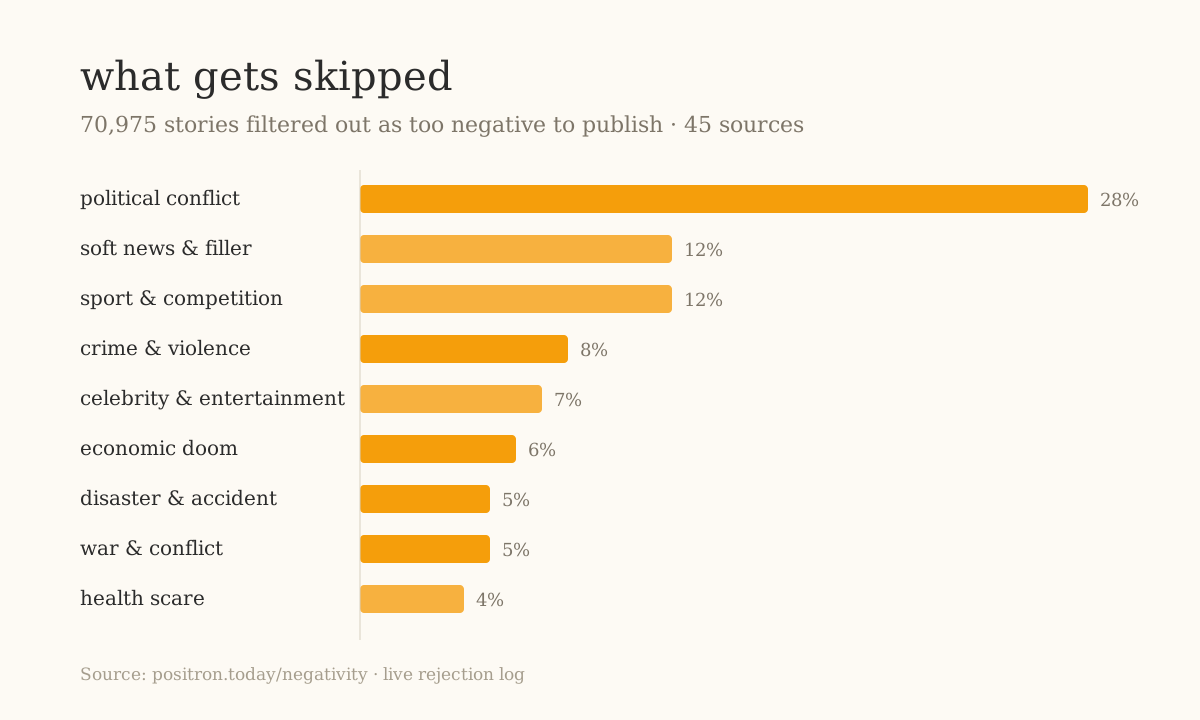
That number isn't a guess or an opinion. It's a receipt. And it's the closest thing I've seen to hard proof that the imbalance is real.
So why "Positron"?
I named the site after a particle, and I promise there's a point to it.
A positron is the antimatter twin of an electron - identical in every way, except that it carries a positive charge instead of a negative one. It's one of the most fundamental things in the universe. It's described by physics, confirmed by experiment, and it's genuinely all around us: in the air, in our bodies, out in the cosmos. And yet almost nobody ever thinks about it. It's always there, quietly doing its thing, mostly invisible to everyday life.
That felt like exactly the right metaphor. Good things are happening in the world all the time - real, verified, meaningful things. They aren't rare. They aren't made up. They're every bit as fundamental and every bit as real as all the bad stuff. They just don't get the attention they deserve. They're the positrons of the news cycle: always present, rarely seen.
This is not about pretending
I want to be really careful here, because this is the part people misunderstand, and it's the part I care about most.
Positron is not about pretending the world is fine. It's not toxic positivity. It's not sticking your fingers in your ears and humming. War is real. Injustice is real. The climate is real. I am not asking anyone to look away from any of it, and I'd be embarrassed to run a site that did.
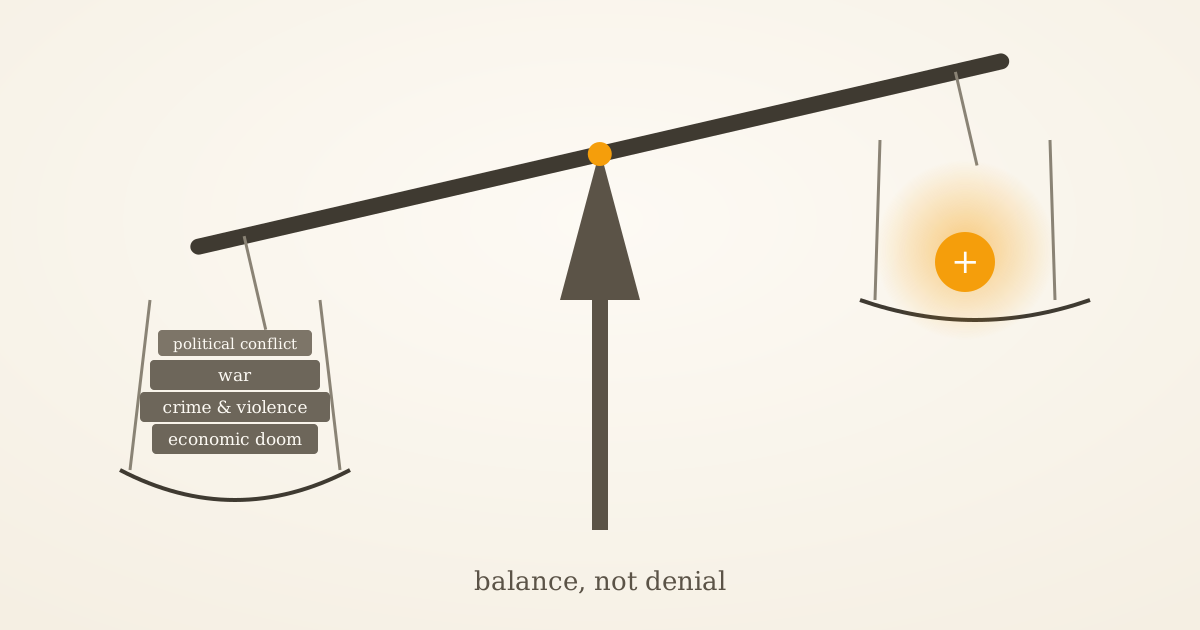
What I'm arguing is something narrower and, I think, harder to disagree with: the coverage is out of proportion to the reality. When 28% of everything that gets filtered is political conflict, that's not a neutral mirror held up to the world - that's a funhouse mirror, stretching the anxious bits and shrinking everything else. All I'm trying to do is add a little weight to the other side of the scale. Not to replace the bad news. To balance it.
And there's a lovely detail that makes this whole thing feel right to me: every story on Positron links straight back to the original publisher. I'm not trying to steal anyone's journalism - I'm trying to be a better discovery layer for the good work that already exists and gets buried. The journalists doing the actual reporting deserve the credit and the clicks. I'd genuinely rather send you to them than keep you here.
Where this goes next
This is the first in a short series of articles where I want to dig properly into the ideas underneath this site. Not just "the news is a bummer, here's a nicer website" - but the actual science of why we're like this, and what it does to us.
Over the next few pieces I want to look at the psychology of negativity bias (why bad really is stronger than good), the beautiful and slightly depressing work of Daniel Kahneman and Amos Tversky on how we overvalue losses, the way social media algorithms took all of this human wiring and poured rocket fuel on it, and finally what the research says the constant drip of doom actually does to our minds - and what a better news diet can do instead.
It's a bit of a rabbithole, and I've loved every minute of climbing down into it. My friend from the coffee was right to step back from the news as it is. I just don't think stepping back should be the only option. There's another one - and it was always there. You just needed somewhere to look for it.
Hope this was a useful start. More soon.
Cheers / Rik
Het positronprincipe: waarom goed nieuws echt nieuws is dat je gewoon nooit ziet
Een paar weken geleden zat ik met een vriend koffie te drinken, en ergens tussen de eerste en tweede kop zei ze iets dat me bijbleef. "Ik ben eigenlijk gestopt met het lezen van het nieuws," zei ze. "Het maakt me gewoon vreselijk, en dan voel ik me schuldig omdat ik niet weet wat er aan de hand is." En hier is het ding - ze is niet lui, of oppervlakkig, of zich voor de wereld verbergend. Ze is een van de meest betrokken, nieuwsgierige mensen die ik ken. Ze had gewoon stilletjes besloten dat het dagelijkse nieuws haar meer kwaad deed dan goed.
Ik heb de afgelopen tijd een soortgelijke zin van veel mensen gehoord. En elke keer heb ik dezelfde reactie: ik begrijp het. Ik begrijp het volledig. Want ik voelde me jarenlang precies hetzelfde, en het is de hele reden waarom Positron Today bestaat.
Slecht nieuws is geen samenzwering - het is gewoon hoe aandacht werkt
Laat me iets duidelijk maken, want het is belangrijk. Ik denk niet dat er ergens een rookgevulde kamer is waar redacteuren besluiten om je ochtend te verpesten. De onophoudelijke negativiteit van het nieuws is geen complot. Het is iets veel gewoner, en eerlijk gezegd veel moeilijker op te lossen: het is het volkomen voorspelbare resultaat van hoe menselijke aandacht, menselijke psychologie en de media-industrie allemaal in dezelfde richting duwen.
Wij zijn, als soort, geprogrammeerd om meer aandacht te besteden aan slechte dingen dan aan goede dingen. Er zijn tientallen jaren aan degelijk onderzoek achter deze bewering - ik zal in de volgende artikelen op de feitelijke wetenschap ingaan, want het is oprecht fascinerend - maar je weet het al in je onderbuik. Eén nare opmerking blijft langer bij je hangen dan tien vriendelijke. Eén ding dat verkeerd gaat, kleurt je hele dag op een manier die één ding dat goed gaat nooit helemaal lijkt te kunnen.
Plaats nu die zeer menselijke neiging naast een media-industrie die leeft of sterft op klikken, paginaweergaven en advertenties, en je hebt geen samenzwering nodig. Je hebt gewoon prikkels nodig. Negatieve koppen krijgen meer aandacht, meer aandacht leidt tot meer klikken, meer klikken zorgen voor meer geld. Iedereen in die keten gedraagt zich rationeel. Het resultaat is een beeld van de wereld dat systematisch, structureel is gekant naar het slechtste ervan.
Het deel waar ik daadwerkelijk heb geteld
Lange tijd was dit gewoon een gevoel van mij - een hardnekkige achterdocht dat het nieuws negatiever was dan de wereld die het zou moeten beschrijven. Maar een gevoel is geen bewijs, en ik wilde geen hele website bouwen op basis van een gevoel.
Dus deed ik er iets aan. Elke dag scant Positron tientallen nieuwsbronnen - de BBC, de Guardian, De Standaard, Le Monde, Nature, en ongeveer veertig anderen - en een AI leest elke kop en sorteert de werkelijk positieve verhalen van de negatieve, angstige, sombere. De goede verhalen worden gepubliceerd. En de rest? Ik houd het. Alles. In een lopend logboek dat ik Wat wordt overgeslagen noem.
Ik moet toegeven, zelfs ik was een beetje verbluft toen ik naar de totalen keek. Terwijl ik dit schrijf, bevat dat logboek 70.975 artikelen die zijn gefilterd als te negatief om te publiceren. Bijna eenenzeventig duizend. Van vijfentwintig bronnen. En wanneer je analyseert wat al die negativiteit eigenlijk is, is het beeld bijna komisch somber: politiek conflict is de grootste categorie met maar liefst 28%, gevolgd door criminaliteit en geweld, economische ondergang, rampen en ongelukken, oorlog. Verhaal na verhaal na verhaal, ontworpen - niet kwaadaardig, gewoon betrouwbaar - om je het gevoel te geven dat de wereld in brand staat.
Dat aantal is geen gok of een mening. Het is een bon. En het is het dichtste dat ik heb gezien bij hard bewijs dat de ongelijkheid echt is.
Waarom "Positron"?
Ik heb de site vernoemd naar een deeltje, en ik beloof dat er een punt aan zit.
Een positron is de antimaterietweeling van een elektron - identiek op elke manier, behalve dat het een positieve lading draagt in plaats van een negatieve. Het is een van de meest fundamentele dingen in het universum. Het wordt beschreven door de natuurkunde, bevestigd door experimenten, en het is oprecht overal om ons heen: in de lucht, in onze lichamen, daarbuiten in het heelal. En toch denkt bijna niemand er ooit aan. Het is altijd daar, stilletjes zijn ding doend, meestal onzichtbaar voor het dagelijks leven.
Dat voelde als precies de juiste metafoor. Goede dingen gebeuren de hele tijd in de wereld - echte, geverifieerde, betekenisvolle dingen. Ze zijn niet zeldzaam. Ze zijn niet verzonnen. Ze zijn even fundamenteel en even echt als al het slechte. Ze krijgen alleen niet de aandacht die ze verdienen. Ze zijn de positrons van de nieuws cyclus: altijd aanwezig, zelden gezien.
Dit gaat niet over doen alsof
Ik wil hier echt voorzichtig zijn, want dit is het deel dat mensen verkeerd begrijpen, en het is het deel waar ik het meest om geef.
Positron gaat niet over doen alsof de wereld in orde is. Het is geen giftige positiviteit. Het is niet je vingers in je oren steken en neuriën. Oorlog is echt. Ongerechtigheid is echt. Het klimaat is echt. Ik vraag niemand om weg te kijken van een van deze dingen, en ik zou me schamen om een site te runnen die dat wel doet.
Wat ik betoog is iets smaller en, denk ik, moeilijker om het mee oneens te zijn: de verslaggeving is uit verhouding tot de werkelijkheid. Wanneer 28% van alles wat wordt gefilterd politiek conflict is, is dat geen neutrale spiegel die naar de wereld wordt gehouden - dat is een spiegeltje van een pretpark, dat de angstige delen uitrekt en alles wat anders is verkleint. Alles wat ik probeer te doen is een beetje gewicht aan de andere kant van de schaal toe te voegen. Niet om het slechte nieuws te vervangen. Om het in balans te brengen.
En er is een mooi detail dat dit hele idee goed laat voelen voor mij: elk verhaal op Positron linkt rechtstreeks terug naar de oorspronkelijke uitgever. Ik probeer niemand's journalistiek te stelen - ik probeer een betere ontdekkingslaag te zijn voor het goede werk dat al bestaat en wordt begraven. De journalisten die het daadwerkelijke verslag doen, verdienen de eer en de klikken. Ik zou oprecht liever jou naar hen sturen dan je hier te houden.
Waar dit naartoe gaat
Dit is de eerste in een korte serie artikelen waarin ik dieper wil ingaan op de ideeën achter deze site. Niet alleen "het nieuws is een tegenvaller, hier is een leukere website" - maar de feitelijke wetenschap van waarom we zo zijn, en wat het met ons doet.
In de komende stukken wil ik kijken naar de psychologie van de negativiteitsbias (waarom slecht echt sterker is dan goed), het prachtige en iets deprimerende werk van Daniel Kahneman en Amos Tversky over hoe we verliezen overwaarderen, de manier waarop sociale media-algoritmen al deze menselijke bedrading hebben genomen en er raketbrandstof op hebben gegoten, en tenslotte wat het onderzoek zegt dat de constante druppel van ondergang daadwerkelijk met onze geest doet - en wat een beter nieuwsdieet in plaats daarvan kan doen.
Het is een beetje een konijnenhol, en ik heb elk moment genoten van het naar beneden klimmen. Mijn vriend van de koffie had gelijk om een stap terug te doen van het nieuws zoals het is. Ik denk alleen niet dat een stap terug de enige optie zou moeten zijn. Er is een andere - en die was er altijd al. Je moest alleen ergens kijken om het te vinden.
Ik hoop dat dit een nuttige start was. Meer binnenkort.
Groeten / Rik
Le principe du positron : pourquoi les bonnes nouvelles sont de vraies nouvelles que vous ne voyez jamais
Il y a quelques semaines, je prenais un café avec une amie, et quelque part entre la première et la deuxième tasse, elle a dit quelque chose qui m'a marqué. "J'ai essentiellement arrêté de lire les nouvelles," a-t-elle dit. "Ça me fait juste me sentir terrible, et ensuite je me sens coupable de ne pas savoir ce qui se passe." Et voici le truc - elle n'est pas paresseuse, ni superficielle, ni en train de fuir le monde. C'est l'une des personnes les plus engagées et curieuses que je connaisse. Elle avait simplement décidé en silence que les nouvelles quotidiennes lui faisaient plus de mal que de bien.
J'ai entendu une version de cette phrase de beaucoup de gens récemment. Et à chaque fois, j'ai la même réaction : je comprends. Je comprends complètement. Parce que je me suis senti exactement de la même manière, pendant des années, et c'est la raison pour laquelle Positron Today existe.
Les mauvaises nouvelles ne sont pas une conspiration - c'est juste ainsi que fonctionne l'attention
Laissez-moi être clair sur quelque chose dès le départ, car cela compte. Je ne pense pas qu'il y ait une pièce remplie de fumée quelque part où des rédacteurs décident de ruiner votre matinée. La négativité incessante des nouvelles n'est pas un complot. C'est quelque chose de beaucoup plus ordinaire, et honnêtement beaucoup plus difficile à corriger : c'est le résultat complètement prévisible de la façon dont l'attention humaine, la psychologie humaine et le secteur des médias poussent tous dans la même direction.
Nous sommes, en tant qu'espèce, câblés pour prêter plus d'attention aux mauvaises choses qu'aux bonnes choses. Il y a des décennies de recherches solides derrière cela - je vais entrer dans la science réelle dans les prochains articles, car c'est vraiment fascinant - mais vous le savez déjà dans votre instinct. Un commentaire désagréable reste avec vous plus longtemps que dix gentils. Une seule chose qui va mal colore toute votre journée d'une manière qu'une seule chose qui va bien ne parvient jamais tout à fait à faire.
Maintenant, mettez cette tendance très humaine à côté d'une industrie médiatique qui vit ou meurt par les clics, les pages vues et la publicité, et vous n'avez pas besoin d'une conspiration. Vous avez juste besoin d'incitations. Les titres négatifs attirent plus d'attention, plus d'attention génère plus de clics, plus de clics rapportent plus d'argent. Tout le monde dans cette chaîne se comporte de manière rationnelle. Le résultat est une image du monde qui est systématiquement, structurellement inclinée vers le pire.
La partie où j'ai vraiment compté
Pendant longtemps, c'était juste un sentiment de ma part - une suspicion tenace que les nouvelles étaient plus négatives que le monde qu'elles étaient censées décrire. Mais un sentiment n'est pas une preuve, et je ne voulais pas construire un site entier sur une ambiance.
Alors j'ai agi. Chaque jour, Positron scanne des dizaines de sources d'actualités - la BBC, le Guardian, De Standaard, Le Monde, Nature, et environ quarante autres - et une IA lit chaque titre et trie les histoires véritablement positives des négatives, anxieuses et sombres. Les bonnes nouvelles sont publiées. Et le reste ? Je le garde. Tout. Dans un journal en cours que j'appelle Ce qui est sauté.
Je dois admettre, même moi, j'étais un peu stupéfait quand j'ai regardé les totaux. Au moment où j'écris cela, ce journal contient 70,975 articles filtrés comme trop négatifs pour être publiés. Près de soixante-onze mille. Provenant de quarante-cinq sources. Et quand vous décomposez ce que toute cette négativité est réellement, le tableau est presque comiquement sombre : le conflit politique est la plus grande catégorie avec un total de 28 %, suivi par la criminalité et la violence, le désastre économique, le désastre et l'accident, la guerre. Histoire après histoire après histoire, conçue - pas malicieusement, juste de manière fiable - pour vous faire sentir que le monde est en feu.
Ce chiffre n'est pas une estimation ou une opinion. C'est un reçu. Et c'est la chose la plus proche que j'ai vue d'une preuve tangible que le déséquilibre est réel.
Alors pourquoi "Positron" ?
J'ai nommé le site d'après une particule, et je promets qu'il y a un sens à cela.
Un positron est le jumeau antimatière d'un électron - identique à tous égards, sauf qu'il porte une charge positive au lieu d'une charge négative. C'est l'une des choses les plus fondamentales de l'univers. Elle est décrite par la physique, confirmée par l'expérience, et elle est réellement tout autour de nous : dans l'air, dans nos corps, dans le cosmos. Et pourtant, presque personne n'y pense jamais. Elle est toujours là, faisant silencieusement son travail, principalement invisible dans la vie quotidienne.
Cela m'a semblé être exactement la bonne métaphore. De bonnes choses se produisent dans le monde tout le temps - des choses réelles, vérifiées, significatives. Elles ne sont pas rares. Elles ne sont pas inventées. Elles sont tout aussi fondamentales et tout aussi réelles que toutes les mauvaises choses. Elles ne reçoivent tout simplement pas l'attention qu'elles méritent. Ce sont les positrons du cycle de l'information : toujours présents, rarement vus.
Ce n'est pas une question de faire semblant
Je veux être vraiment prudent ici, car c'est la partie que les gens mal comprennent, et c'est la partie qui m'importe le plus.
Positron n'est pas une question de faire semblant que le monde va bien. Ce n'est pas une positivité toxique. Ce n'est pas se boucher les oreilles et fredonner. La guerre est réelle. L'injustice est réelle. Le climat est réel. Je ne demande à personne de détourner le regard de quoi que ce soit, et je serais embarrassé de diriger un site qui le ferait.
Ce que j'argumente est quelque chose de plus étroit et, je pense, plus difficile à contester : la couverture est hors de proportion par rapport à la réalité. Quand 28 % de tout ce qui est filtré est un conflit politique, ce n'est pas un miroir neutre tenu devant le monde - c'est un miroir déformant, étirant les éléments anxieux et rétrécissant tout le reste. Tout ce que j'essaie de faire, c'est d'ajouter un peu de poids de l'autre côté de la balance. Pas pour remplacer les mauvaises nouvelles. Pour les équilibrer.
Et il y a un joli détail qui rend tout cela juste pour moi : chaque histoire sur Positron renvoie directement à l'éditeur original. Je n'essaie pas de voler le journalisme de quiconque - j'essaie d'être une meilleure couche de découverte pour le bon travail qui existe déjà et qui est enterré. Les journalistes qui font réellement le reportage méritent le crédit et les clics. Je préférerais sincèrement vous envoyer vers eux que de vous garder ici.
Où cela va ensuite
C'est le premier d'une courte série d'articles où je veux creuser correctement les idées sous-jacentes à ce site. Pas juste "les nouvelles sont déprimantes, voici un site plus agréable" - mais la science réelle de pourquoi nous sommes comme ça, et ce que cela nous fait.
Au cours des prochains articles, je veux examiner la psychologie du biais de négativité (pourquoi le mauvais est vraiment plus fort que le bon), le travail magnifique et légèrement déprimant de Daniel Kahneman et Amos Tversky sur la façon dont nous surestimons les pertes, la manière dont les algorithmes des médias sociaux ont pris tout ce câblage humain et y ont ajouté du carburant pour fusée, et enfin ce que la recherche dit que le goutte-à-goutte constant de malheur fait réellement à nos esprits - et ce qu'un meilleur régime d'information peut faire à la place.
C'est un peu un terrier de lapin, et j'ai adoré chaque minute à y descendre. Mon amie du café avait raison de prendre du recul par rapport aux nouvelles telles qu'elles sont. Je ne pense juste pas que prendre du recul devrait être la seule option. Il y en a une autre - et elle a toujours été là. Vous aviez juste besoin d'un endroit où la chercher.
J'espère que cela a été un bon début. Plus bientôt.
À bientôt / Rik