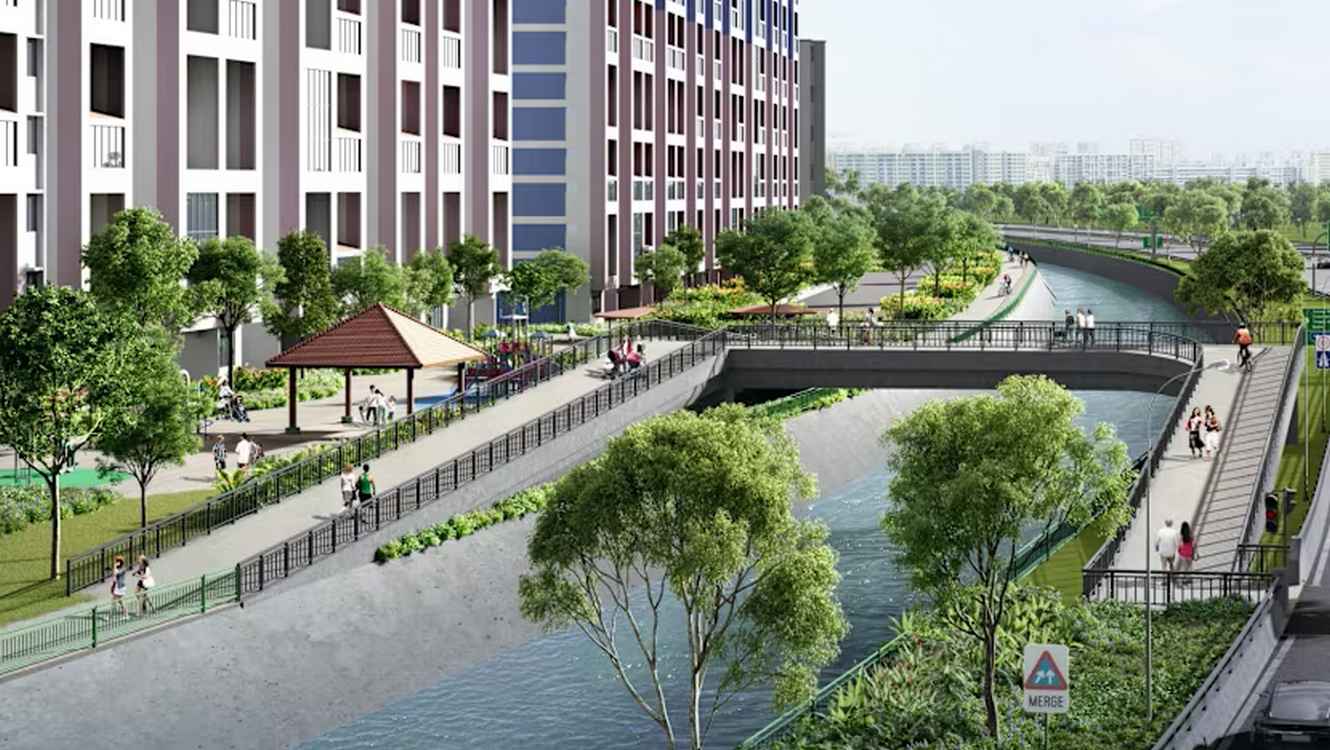
Singapore's First 3D-Printed Bridge Planned for 2028 After Rigorous TestingEerste 3D-gerespte brug van Singapore gepland in 2028 na streng geteste ontwikkelingLa première passerelle 3D imprimée au Singapour prévue en 2028 après des tests approfondisés
Good News Network · 8 April 2026
Singapore is set to debut the use of 3D-printed concrete in the form of a new pedestrian bridge, which will stretch 30 feet across a waterway. The project, managed by the Land Transit Authority (LTA), has completed a testing phase where segments of printed concrete were subjected to stress tests under the weight of large water tanks. The first printed segments formed a scale model of what will be the eventual bridge, and it was finished in 40 hours compared to two weeks that might have been expected with manual concrete laying. This innovative project aims to improve transit options in the Jurong River and Temah areas of the city state. It's an exciting development in Singapore's technology field.Singapore stelt voor het eerst een 3D-gerespte brug in dienst, die over water strekt tot 9 meter breed en 4,5 meter hoog. Het project van de Land Transit Authority (LTA) heeft een testfasie afgerond waarin segments gerespte beton waren onderworpen aan belastingstests met grote watervatertanken als last. Het eerste gerespte segment vormde een schaalmodel van het uiteindelijke brugontwerp, en werd in 40 uur gegenereerd in plaats van twee weken dat nodig zou zijn geweest met traditionele betonlaging. Dit innovatieve project strevelt naar verbetering van de transitopties in de Jurongrijver- en Témahdomeinen van destad. Het is een opmerkelijke ontwikkeling in het technologische veldLe Singapour est sur le point de lancer l'utilisation du béton imprimé tridimensionnel dans la forme d'une nouvelle passerelle piédestresse qui coupera un canal. Le projet, géré par L'Administration des Transports Terrestres (LTA), a réalisé une phase de tests où des segments de béton imprimé ont été soumis à des tests de résistance sous le poids de grands conteneurs d'eau. Les premiers segments imprimés formaient un modèle à échelle du design final du pont, et leur production a duré en 40 heures contre deux semaines qui auraient pu être attendues avec une pose traditionnelle du béton. Ce projet innovant vise à améliorer les options de transport dans les régions jurong-rivière et temah de la ville-état. C'est une nouvelle étape importante pour le champ technologique du Singapour.