Mars may be two-faced to its coreMars kan twee gezichten hebben tot aan zijn kernMars pourrait avoir deux visages jusqu'à son noyau
Scientific American · 27 August 2026, at 15:47
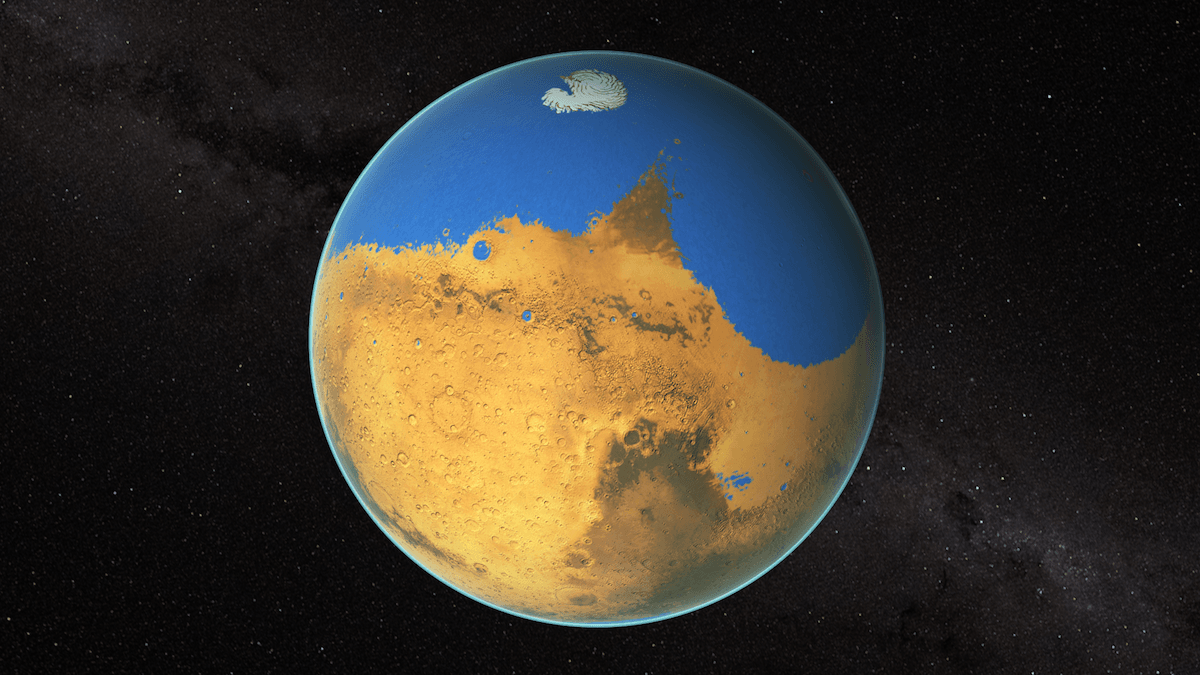
Mars is such a fascinating planet, isn't it? With its two distinct hemispheres, one smooth and low, the other rugged and high, it really makes you wonder about its history. A new study suggests that this difference goes deeper than we thought, reaching all the way to its core! Researchers found that the southern hemisphere's mantle is significantly hotter than the northern one, which could explain some of Mars's geological mysteries. It's incredible how much we can learn about our neighboring planet through innovative techniques like tidal tomography.Mars is zo'n fascinerende planeet, nietwaar? Met zijn twee verschillende hemisferen, de ene glad en laag, de andere ruw en hoog, doet het je echt afvragen over zijn geschiedenis. Een nieuwe studie suggereert dat dit verschil dieper gaat dan we dachten, tot aan de kern! Onderzoekers ontdekten dat de mantel van het zuidelijk halfrond aanzienlijk warmer is dan die van het noordelijke, wat enkele van Mars' geologische mysteries kan verklaren. Het is ongelooflijk hoeveel we kunnen leren over onze buurplaneet door innovatieve technieken zoals getijden-tomografie.Mars est une planète si fascinante, n'est-ce pas ? Avec ses deux hémisphères distincts, l'un lisse et bas, l'autre rugueux et élevé, cela nous fait vraiment réfléchir à son histoire. Une nouvelle étude suggère que cette différence va plus loin que nous le pensions, atteignant même son noyau ! Les chercheurs ont découvert que le manteau de l'hémisphère sud est considérablement plus chaud que celui du nord, ce qui pourrait expliquer certains des mystères géologiques de Mars. C'est incroyable combien nous pouvons apprendre sur notre planète voisine grâce à des techniques innovantes comme la tomographie des marées.