‘Zeptoverse’: CERN finds evidence of an extraordinarily rare particle decay‘Zeptowereld’: CERN vindt bewijs voor een uitzonderlijk zeldzaam deeltjesverval« Zeptovers » : le CERN observe les indices d’une désintégration de particule extraordinairement rare
Euronews · 5 November 2026, at 14:37
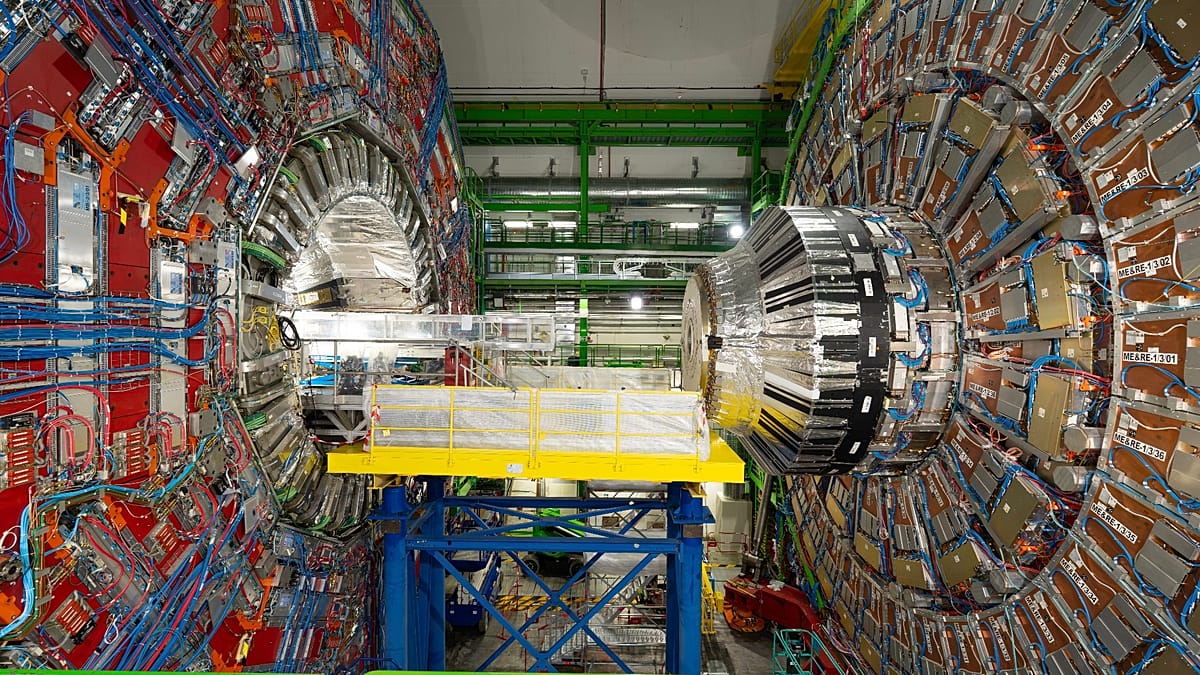
So, CERN scientists have found evidence of a particle decay predicted to happen just once in every 10 billion cases. Using the Large Hadron Collider, they studied short-lived beauty particles created when protons collide. This rare process offers a glimpse into the “zeptoverse”, a tiny, largely unexplored frontier where researchers hope to find new fundamental particles. And here's the exciting part: exploring it could help answer big questions about dark matter and dark energy, which together make up around 95% of the universe.CERN-wetenschappers hebben bewijs gevonden voor een deeltjesverval dat naar verwachting slechts één keer op de 10 miljard gevallen voorkomt. Met de Large Hadron Collider bestudeerden ze kortlevende beautydeeltjes die ontstaan wanneer protonen botsen. Dit zeldzame proces biedt een blik op de ‘zeptowereld’, een piepkleine en grotendeels onverkende grens waar onderzoekers hopen nieuwe fundamentele deeltjes te vinden. En dat is bijzonder spannend: onderzoek hiernaar kan helpen grote vragen over donkere materie en donkere energie te beantwoorden, die samen ongeveer 95 procent van het heelal uitmaken.Les scientifiques du CERN ont trouvé des indices d’une désintégration de particule qui ne se produirait, selon les prévisions, qu’une fois sur 10 milliards. Grâce au Grand collisionneur de hadrons, ils ont étudié des particules beauté éphémères créées lors de collisions entre protons. Ce processus rare offre un aperçu du « zeptovers », une frontière minuscule et largement inexplorée où les chercheurs espèrent découvrir de nouvelles particules fondamentales. Et c’est là que cela devient passionnant : explorer ce domaine pourrait aider à répondre aux grandes questions sur la matière noire et l’énergie noire, qui représentent ensemble environ 95 % de l’Univers.