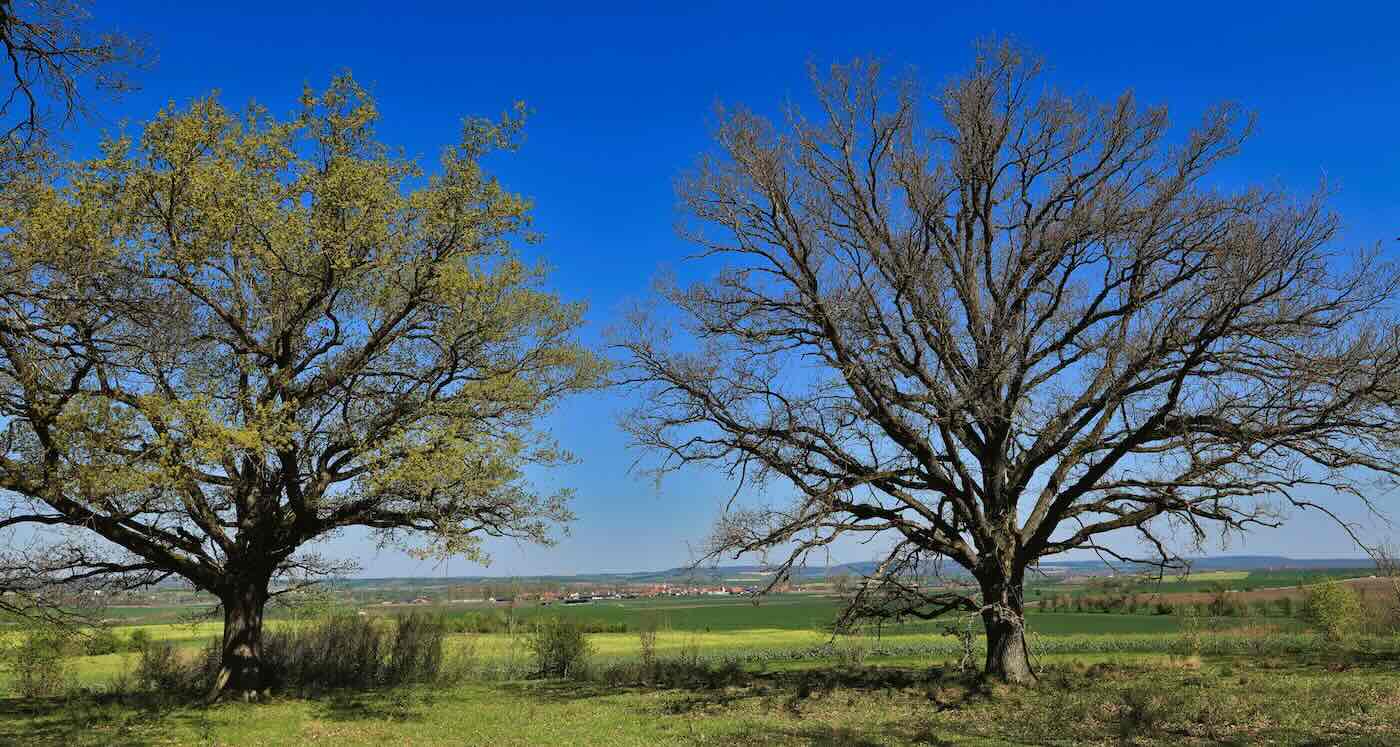
Oak trees will delay sprouting leaves to avoid hungry caterpillars that devoured the trees in previous year: studyEikenbomen zullen het uitlopen van bladeren vertragen om hongerige rupsjes te vermijden die de bomen het vorige jaar verwoestten: studieLes chênes retarderont l'apparition des feuilles pour éviter les chenilles affamées qui ont dévoré les arbres l'année précédente : étude
Good News Network · 4 May 2026, at 04:47
Isn't it fascinating how oak trees can outsmart hungry caterpillars? New research shows that these clever trees delay sprouting their leaves by three days after being heavily infested the previous year. This tactic means that when the caterpillars hatch, there's nothing for them to munch on, which drastically reduces their survival rate. It's a brilliant example of how trees respond flexibly to biological threats, changing our understanding of spring in the forest.Het is fascinerend hoe eikenbomen hongerige rupsen te slim af kunnen zijn! Uit nieuw onderzoek blijkt dat deze slimme bomen hun bladeren drie dagen later laten uitkomen na een zware besmetting het vorige jaar. Deze tactiek betekent dat wanneer de rupsen uitkomen, er niets is om op te knabbelen, wat hun overlevingskans drastisch vermindert. Het is een briljant voorbeeld van hoe bomen flexibel reageren op biologische bedreigingen, wat ons begrip van de lente in het bos verandert.C'est fascinant de voir comment les chênes peuvent déjouer les chenilles affamées ! De nouvelles recherches montrent que ces arbres astucieux retardent l'apparition de leurs feuilles de trois jours après avoir été fortement infestés l'année précédente. Cette tactique signifie que lorsque les chenilles éclosent, il n'y a rien à manger, ce qui réduit considérablement leur taux de survie. C'est un exemple brillant de la façon dont les arbres réagissent de manière flexible aux menaces biologiques, changeant notre compréhension du printemps dans la forêt.