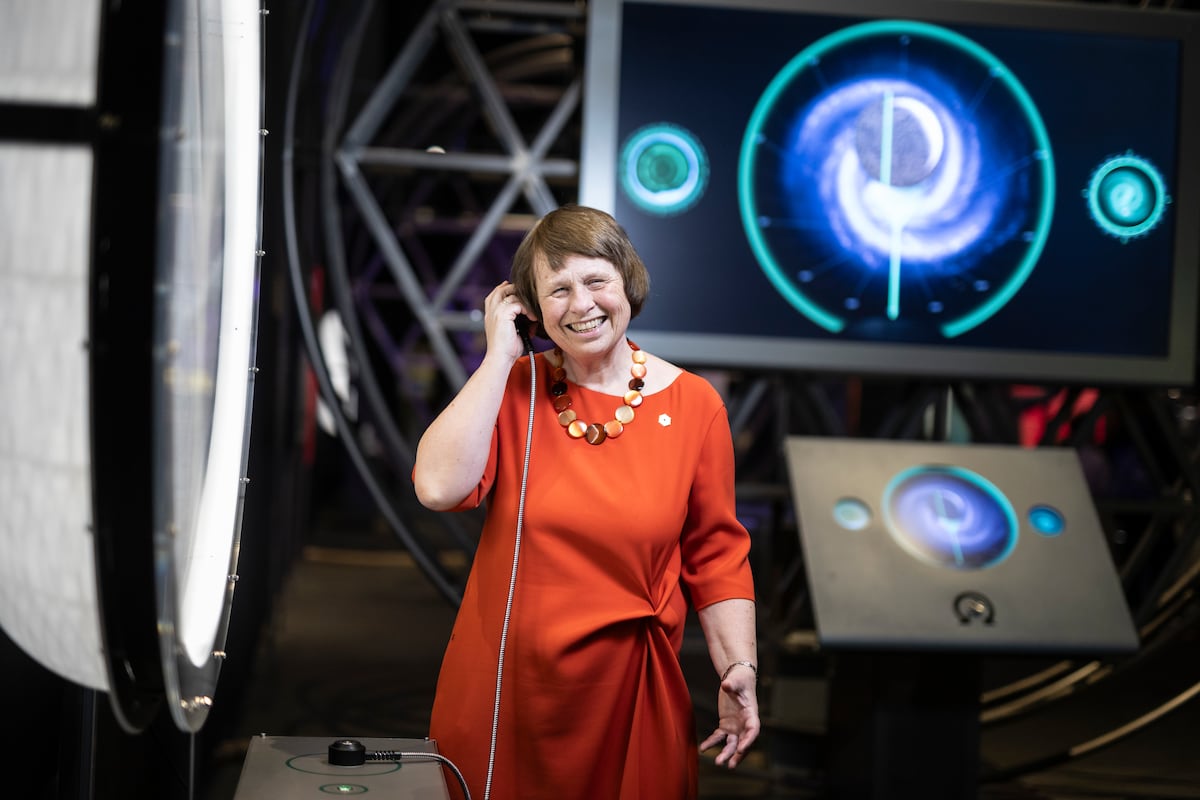
Ewine van Dishoeck, astronomer: ‘We are the first generation who can bring the question of life on other planets from the realm of philosophy into real science’Ewine van Dishoeck, astronoom: ‘Wij zijn de eerste generatie die de vraag naar leven op andere planeten van het rijk van de filosofie naar de echte wetenschap kan brengen’Ewine van Dishoeck, astronome : ‘Nous sommes la première génération qui peut amener la question de la vie sur d'autres planètes du domaine de la philosophie à la vraie science’
El pais · 10 May 2026, at 20:00
Ewine van Dishoeck is an inspiring astrochemist who sees the universe as her laboratory, where unique chemical reactions occur. She believes that her journey into science was sparked by a remarkable teacher in San Diego, despite her family's medical background. Van Dishoeck's work has been pivotal in understanding the formation of stars and planets, earning her the Kavli Prize in 2018. With the help of the James Webb Space Telescope, she reveals that the creation of complex molecules in space is happening faster than we previously thought.Ewine van Dishoeck is een inspirerende astrochemicus die het universum als haar laboratorium beschouwt, waar unieke chemische reacties plaatsvinden. Ze gelooft dat haar reis in de wetenschap werd aangewakkerd door een opmerkelijke lerares in San Diego, ondanks de medische achtergrond van haar familie. Van Dishoeck's werk is cruciaal geweest voor het begrijpen van de vorming van sterren en planeten, wat haar in 2018 de Kavli-prijs opleverde. Met de hulp van de James Webb Ruimtetelescoop onthult ze dat de creatie van complexe moleculen in de ruimte sneller plaatsvindt dan we eerder dachten.Ewine van Dishoeck est une astrochimiste inspirante qui considère l'univers comme son laboratoire, où des réactions chimiques uniques se produisent. Elle pense que son parcours scientifique a été déclenché par une enseignante remarquable à San Diego, malgré le parcours médical de sa famille. Le travail de Van Dishoeck a été essentiel pour comprendre la formation des étoiles et des planètes, lui valant le prix Kavli en 2018. Avec l'aide du télescope spatial James Webb, elle révèle que la création de molécules complexes dans l'espace se produit plus rapidement que nous ne le pensions.