Math’s acclaimed ‘einstein tile’ finds a new home among physicistsWiskundige ‘einstein tegel’ vindt een nieuw thuis bij fysiciLa célèbre ‘tuile einstein’ des mathématiques trouve un nouveau foyer parmi les physiciens
Scientific American · 29 July 2026, at 15:35
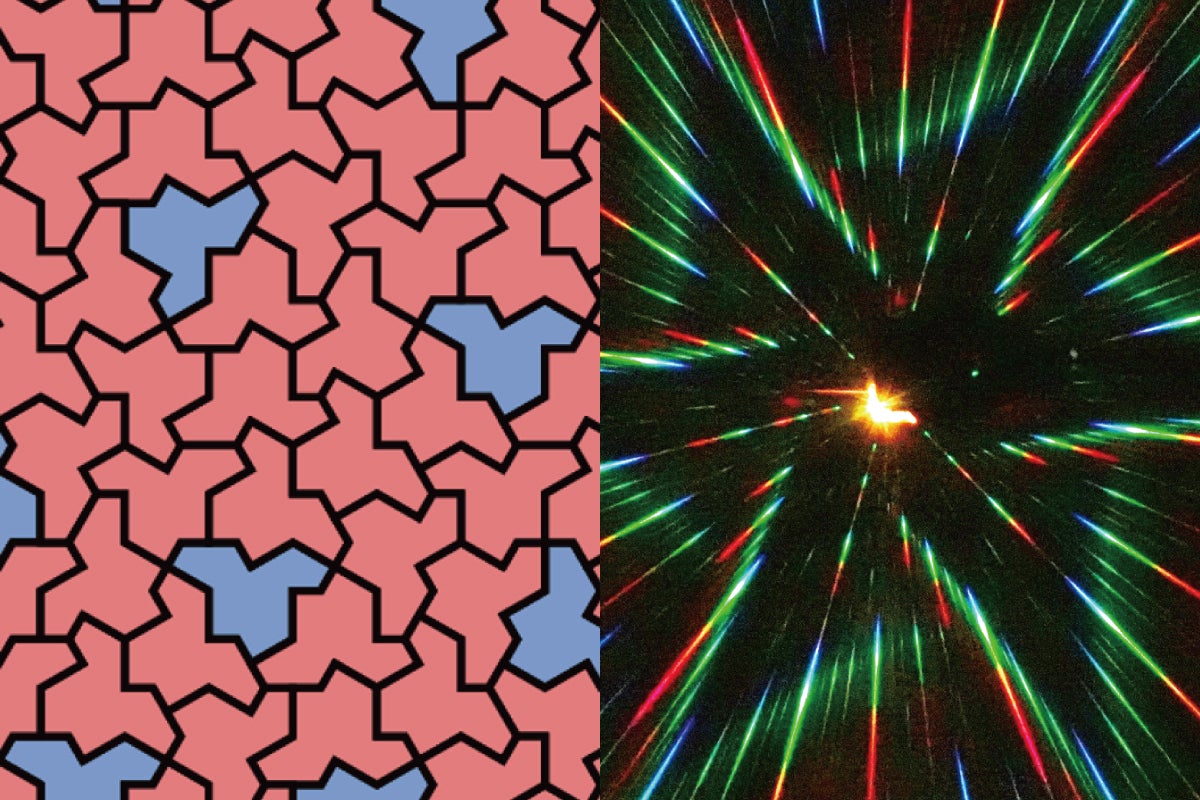
So, here's the scoop! The ‘einstein tile,’ discovered by amateur mathematician David Smith, can cover infinite surfaces without repeating patterns, which is just mind-blowing. Researchers in Japan are now exploring its real-world applications, particularly how it interacts with laser light. They found that this unique shape can create unexpected patterns when light is diffracted, which could lead to advancements in telecommunications and quantum cryptography. It’s fascinating to think that a mathematical curiosity could have such practical benefits!Dus, hier is het nieuws! De ‘einstein tegel,’ ontdekt door amateurwiskundige David Smith, kan oneindige oppervlakken bedekken zonder patronen te herhalen, wat gewoon verbazingwekkend is. Onderzoekers in Japan verkennen nu de praktische toepassingen, vooral hoe het interageert met laserlicht. Ze ontdekten dat deze unieke vorm onverwachte patronen kan creëren wanneer licht wordt diffracted, wat kan leiden tot vooruitgangen in telecommunicatie en kwantumcryptografie. Het is fascinerend om te bedenken dat een wiskundige curiositeit zulke praktische voordelen kan hebben!Alors, voici le scoop ! La ‘tuile einstein’, découverte par le mathématicien amateur David Smith, peut couvrir des surfaces infinies sans répéter de motifs, ce qui est tout simplement incroyable. Des chercheurs au Japon explorent maintenant ses applications dans le monde réel, en particulier comment elle interagit avec la lumière laser. Ils ont découvert que cette forme unique peut créer des motifs inattendus lorsque la lumière est diffractée, ce qui pourrait mener à des avancées dans les télécommunications et la cryptographie quantique. C'est fascinant de penser qu'une curiosité mathématique pourrait avoir de tels avantages pratiques !