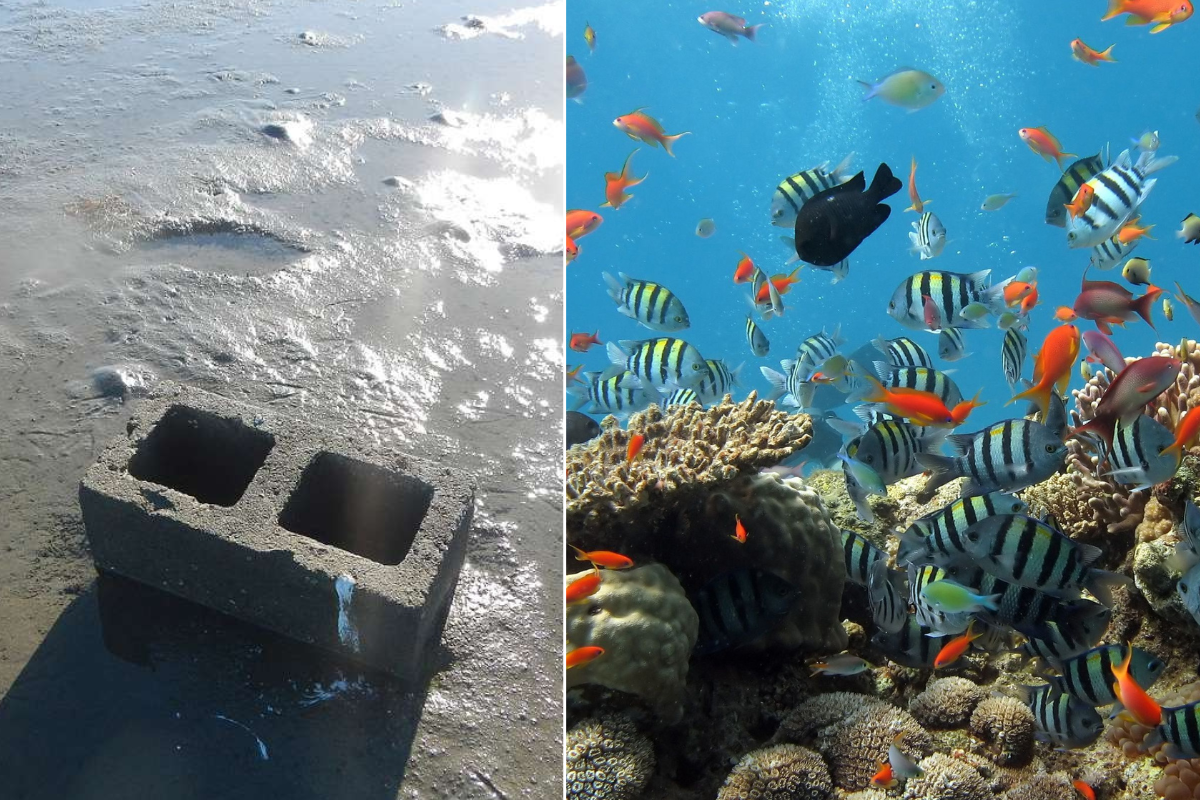
Scientists left cinderblocks in a barren part of the sea. 3 months later they were ecstatic.Wetenschappers lieten cinderblocks achter in een kaal deel van de zee. 3 maanden later waren ze ecstatisch.Des scientifiques ont laissé des blocs de béton dans une partie stérile de la mer. Trois mois plus tard, ils étaient ravis.
Upworthy · 31 July 2026, at 09:09
So, here's an exciting story about how scientists are using concrete blocks to create new coral reefs! They dropped these blocks in a barren area of the Caribbean Sea, and just three months later, marine life started flocking to them. It’s amazing to see how quickly nature can respond, with everything from colorful sponges to juvenile fish making their home there. Over the years, this project has blossomed into a thriving ecosystem, showing us the incredible potential of innovative solutions for our oceans.Dus, hier is een opwindend verhaal over hoe wetenschappers betonnen blokken gebruiken om nieuwe koraalriffen te creëren! Ze lieten deze blokken vallen in een kaal gebied van de Caribische Zee, en slechts drie maanden later begon het zeeleven zich daarheen te haasten. Het is geweldig om te zien hoe snel de natuur kan reageren, met alles van kleurrijke sponzen tot jonge vissen die hun thuis daar maken. In de loop der jaren is dit project uitgegroeid tot een bloeiend ecosysteem, dat ons de ongelooflijke mogelijkheden van innovatieve oplossingen voor onze oceanen laat zien.Alors, voici une histoire passionnante sur la façon dont les scientifiques utilisent des blocs de béton pour créer de nouveaux récifs coralliens ! Ils ont déposé ces blocs dans une zone stérile de la mer des Caraïbes, et seulement trois mois plus tard, la vie marine a commencé à s'y rassembler. C'est incroyable de voir à quelle vitesse la nature peut réagir, avec tout, des éponges colorées aux poissons juvéniles qui s'y installent. Au fil des ans, ce projet s'est transformé en un écosystème florissant, nous montrant le potentiel incroyable des solutions innovantes pour nos océans.