Can quantum computers solve math’s hardest problem?Kunnen quantumcomputers het moeilijkste wiskundige probleem oplossen?Les ordinateurs quantiques peuvent-ils résoudre le problème mathématique le plus difficile?
Scientific American · 7 August 2026, at 07:54
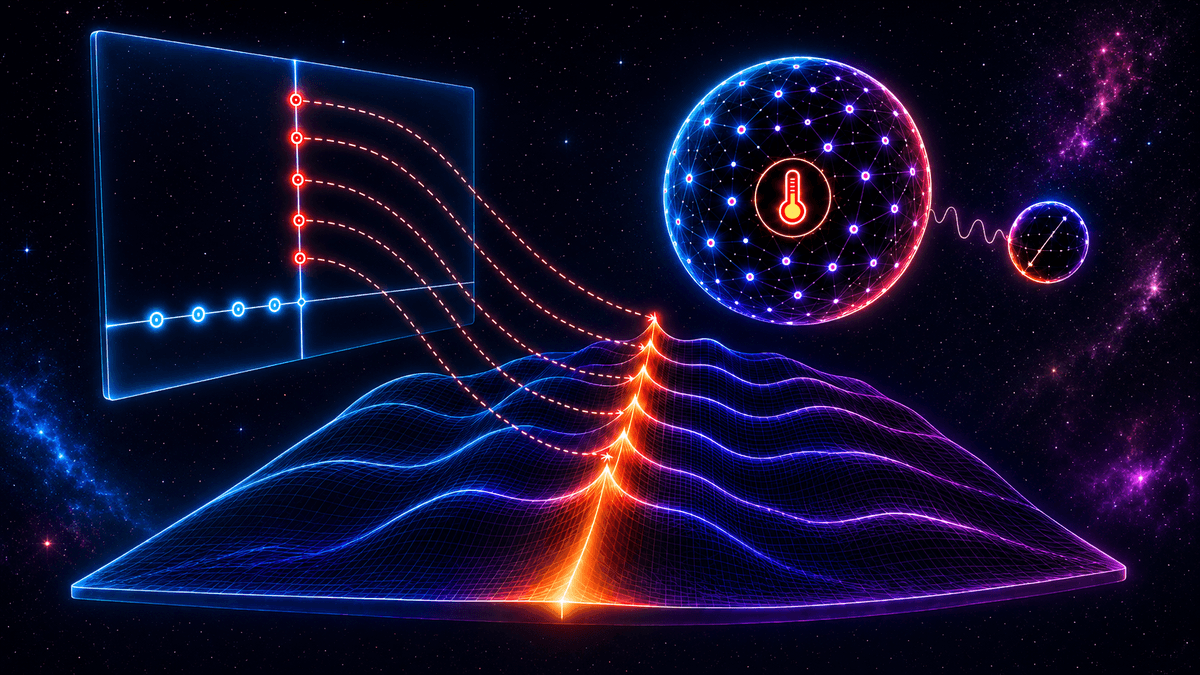
The Riemann hypothesis, a tantalizing mystery in mathematics, suggests that prime numbers follow a hidden pattern. Now, a team in China has used a quantum computer to explore this hypothesis in a groundbreaking way. By encoding the Riemann zeta function into a physical system, they’ve made this abstract concept more tangible. This innovative approach could open new doors for understanding prime numbers and the potential of quantum computing in tackling complex mathematical problems.De Riemann-hypothese, een intrigerend mysterie in de wiskunde, suggereert dat priemgetallen een verborgen patroon volgen. Nu heeft een team in China een quantumcomputer gebruikt om deze hypothese op een baanbrekende manier te verkennen. Door de Riemann-zeta-functie in een fysiek systeem te coderen, hebben ze dit abstracte concept tastbaarder gemaakt. Deze innovatieve benadering zou nieuwe deuren kunnen openen voor het begrijpen van priemgetallen en het potentieel van quantumcomputing bij het aanpakken van complexe wiskundige problemen.L'hypothèse de Riemann, un mystère fascinant en mathématiques, suggère que les nombres premiers suivent un schéma caché. Maintenant, une équipe en Chine a utilisé un ordinateur quantique pour explorer cette hypothèse de manière révolutionnaire. En codant la fonction zêta de Riemann dans un système physique, ils ont rendu ce concept abstrait plus tangible. Cette approche innovante pourrait ouvrir de nouvelles perspectives pour comprendre les nombres premiers et le potentiel de l'informatique quantique dans la résolution de problèmes mathématiques complexes.