Black holes or black hole stars? astronomers spar over webb telescope's mysterious discoveriesZwarte gaten of zwarte-gatsterren? astronomen debatteren over webbs mysterieuze ontdekkingenDes trous noirs ou des étoiles à trous noirs? les astronomes débattent sur les mystérieuses découvertes de webb
Quanta Magazine · 14 September 2026, at 22:07
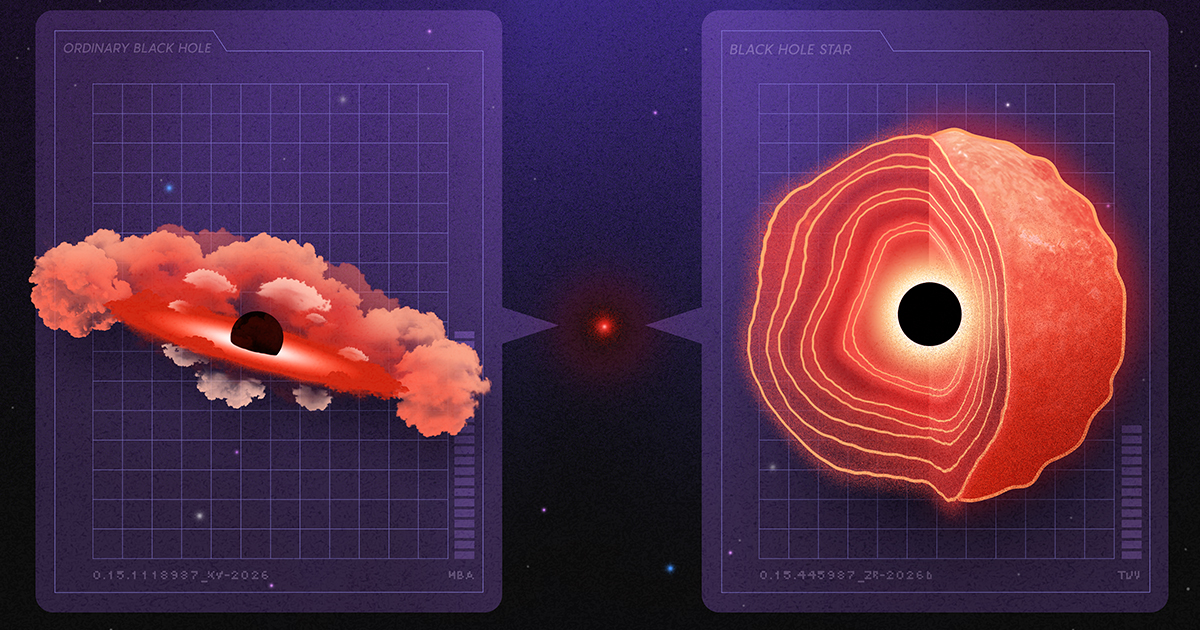
The James Webb Space Telescope has spotted mysterious objects called 'little red dots' scattered throughout the early universe, and astronomers are locked in heated debate about what they actually are. Initially, researchers thought these blindingly bright, tiny points of red light were distant galaxies, but that didn't fit with how quickly they would have had to grow. Now two teams have proposed something entirely new - that Webb is witnessing the births of supermassive black holes hidden inside colossal stars, which they're calling 'black hole stars.' The discovery has sparked a flurry of follow-up research and polarized the field, with some astronomers enthusiastically embracing this bold interpretation while others remain skeptical about whether these objects truly represent a fundamentally new phenomenon.De James Webb Space Telescope heeft mysterieuze objecten ontdekt die 'kleine rode stippen' worden genoemd, verspreid door het vroege universum, en astronomen debatteren heftig over wat ze werkelijk zijn. Onderzoekers dachten eerst dat deze verbindend heldere, kleine puntjes rood licht verre sterrenstelsels waren, maar dat paste niet bij hoe snel ze hadden moeten groeien. Nu stellen twee teams iets geheel nieuws voor - dat Webb de geboorte van superzware zwarte gaten waarneemt die verborgen zitten in kolossale sterren, die zij 'zwarte-gatsterren' noemen. De ontdekking heeft geleid tot veel vervolgonderzoek en het veld is verdeeld, waarbij sommige astronomen deze gedurfde interpretatie enthousiast ondersteunen terwijl anderen sceptisch blijven over deze fundamenteel nieuwe verschijnsel.Le télescope spatial James Webb a découvert des objets mystérieux appelés 'petits points rouges' dispersés dans l'univers primordial, et les astronomes débattent avec véhémence sur leur nature réelle. Les chercheurs pensaient d'abord que ces minuscules points de lumière rouge extrêmement brillants étaient des galaxies lointaines, mais cela ne correspondait pas à la vitesse avec laquelle elles auraient dû se former. Maintenant, deux équipes proposent quelque chose de totalement nouveau - que Webb assiste à la naissance de trous noirs supermassifs cachés dans des étoiles colossales, qu'ils appellent des 'étoiles à trous noirs'. Cette découverte a déclenché une vague de recherches ultérieures et a divisé le domaine, certains astronomes embrassant avec enthousiasme cette interprétation audacieuse tandis que d'autres restent skeptiques quant à l'existence de ce phénomène fondamentalement nouveau.