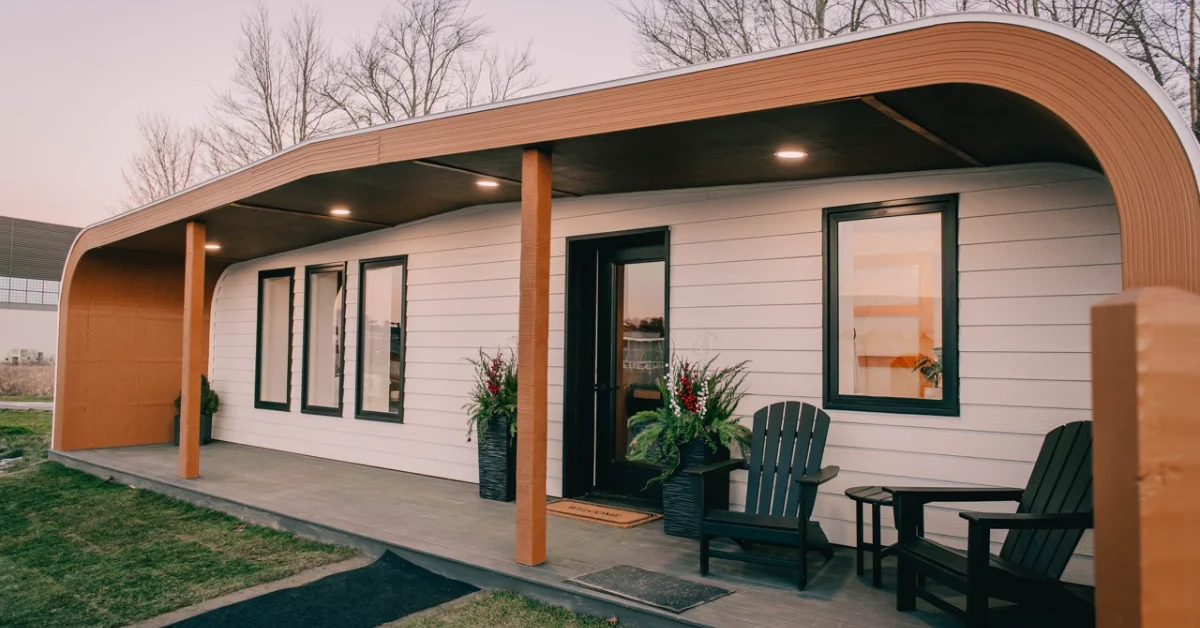
These 3D-printed homes are built using 'ink' made of sawmill wasteDeze 3D-geprinte huizen worden gebouwd met 'inkt' gemaakt van zaagmeulenafvalCes maisons imprimées en 3D sont construites avec de l'« encre » fabriquée à partir de déchets de scierie
Good Good Good · 17 September 2026, at 22:35
Researchers at the University of Maine are scaling up their groundbreaking BioHome3D technology - homes that are completely 3D-printed using bio-based materials made from sawmill waste. Now they're partnering with a housing nonprofit to build nine of these homes across the Greater Bangor area, with a $4 million investment to test how to manufacture them faster and more efficiently. So here's what's exciting: the original prototype has already survived three Maine winters and was built and installed in just half a day, and their new printer can now deposit material at 500 to 1,000 pounds per hour - five to ten times faster than before. The team is working toward what they call a "Ford factory of homes," where the entire building process becomes automated and scalable, tackling housing shortages, labor problems, and supply chain issues all at once.Onderzoekers van de University of Maine schalen hun baanbrekende BioHome3D-technologie op - huizen die volledig in 3D worden geprint met biologische materialen gemaakt van zaagmeulenafval. Nu werken ze samen met een woningbouworganisatie om negen van deze huizen in de regio Greater Bangor te bouwen, met een investering van $4 miljoen om te testen hoe ze sneller en efficiënter kunnen worden geproduceerd. En dat is nou precies wat fascinerend is: het originele prototype heeft al drie Maine-winters doorstaan en werd in slechts een halve dag gebouwd en geplaatst, en hun nieuwe printer kan nu 500 tot 1.000 pond per uur afzetten - vijf tot tien keer sneller dan voorheen. Het team werkt naar wat zij een "Ford-fabriek van huizen" noemen, waar het volledige bouwproces wordt geautomatiseerd en opschaalbaar, wat woningtekorten, arbeidsproblemen en toeleveringskettenproblemen allemaal tegelijk aanpakt.Les chercheurs de l'Université du Maine intensifient leur technologie révolutionnaire BioHome3D - des maisons entièrement imprimées en 3D à partir de matériaux biologiques fabriqués à partir de déchets de scierie. Ils s'associent maintenant à un organisme d'aide au logement pour construire neuf de ces maisons dans la région de Greater Bangor, avec un investissement de 4 millions de dollars pour tester comment les fabriquer plus rapidement et plus efficacement. Et voilà ce qui est vraiment passionnant : le prototype original a déjà résisté à trois hivers du Maine et a été construit et installé en seulement une demi-journée, et leur nouvelle imprimante peut désormais déposer du matériau à 500 à 1 000 livres par heure - cinq à dix fois plus vite qu'avant. L'équipe travaille vers ce qu'ils appellent une "usine Ford de maisons", où l'ensemble du processus de construction devient automatisé et évolutif, s'attaquant à la fois aux pénuries de logements, aux problèmes de main-d'œuvre et aux problèmes de chaîne d'approvisionnement.