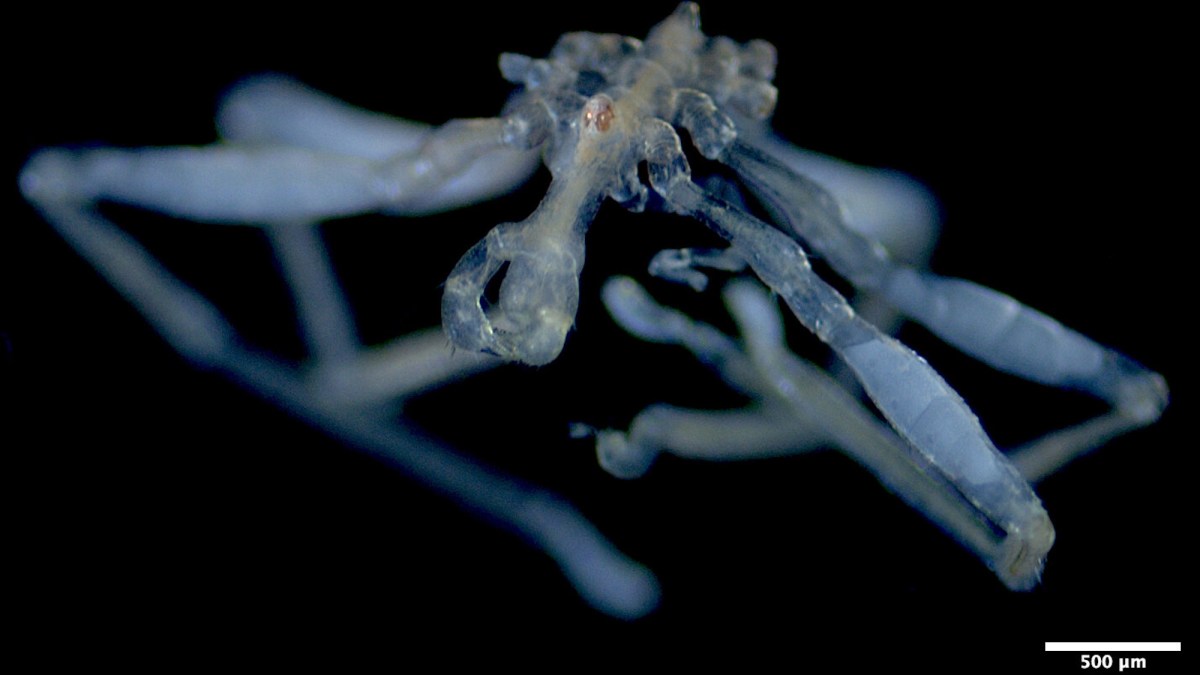
Sea spider with hairy feet, three lips, and red eyes found in CanadaZeekreeft met harige voeten, drie lippen en rode ogen ontdekt in CanadaAraignée de mer aux pieds poilus, trois lèvres et yeux rouges découverte au Canada
Popular Science · 24 September 2026, at 00:37
So: marine biologists at the University of British Columbia have uncovered two fascinating new species of sea spiders in Canada’s Salish Sea. One sports hairy feet and striking red eyes, while the other struggles to groom itself, becoming a tiny ecosystem for parasites. These creatures are truly weird wonders, with traits like breathing through their skin and males caring for eggs on their legs. And here's the thing - these discoveries highlight how little we know about marine life in this area, especially as climate change threatens their fragile habitats.Dus: mariene biologen van de Universiteit van British Columbia hebben twee fascinerende nieuwe soorten zeekreeften ontdekt in de Salish Sea in Canada. De ene heeft harige voeten en opvallende rode ogen, terwijl de andere zichzelf niet goed kan verzorgen en zo een klein ecosysteem voor parasieten wordt. Deze wezens zijn echt vreemde wonderen, met eigenschappen zoals ademhalen door de huid en mannetjes die voor de eieren op hun poten zorgen. En hier komt het op neer - deze ontdekkingen tonen aan hoe weinig we weten over het zeeleven in dit gebied, vooral nu klimaatverandering hun kwetsbare leefomgeving bedreigt.Alors: des biologistes marins de l’Université de la Colombie-Britannique ont découvert deux nouvelles espèces fascinantes d’araignées de mer dans la mer de Salish au Canada. L’une possède des pieds poilus et des yeux rouges saisissants, tandis que l’autre a du mal à se nettoyer, devenant un véritable écosystème pour des parasites. Ces créatures sont de véritables merveilles étranges, avec des traits comme la respiration à travers la peau et les mâles qui prennent soin des œufs sur leurs pattes. Et voici le truc - ces découvertes montrent à quel point nous connaissons peu la vie marine dans cette région, surtout avec le changement climatique qui menace leurs habitats fragiles.