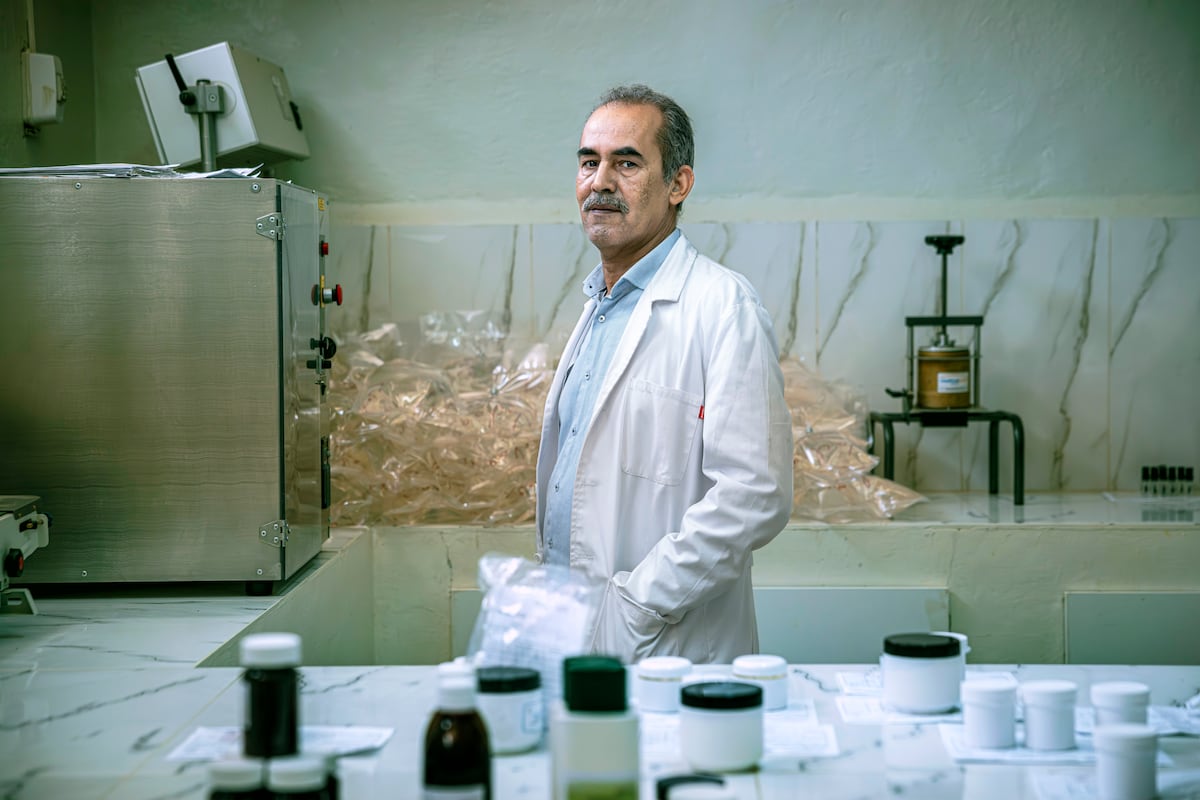
The Sahrawi pharmaceutical lab battling against sand and shortages: ‘We are a rose in the desert’Het Sahrawi farmaceutisch lab vecht tegen zand en tekorten: ‘Wij zijn een roos in de woestijn’Le laboratoire pharmaceutique sahraoui lutte contre le sable et les pénuries : « Nous sommes une rose dans le désert »
El pais · 27 September 2026, at 06:07
I find it fascinating how the Mohamed Embarek Fakal·la Pharmaceutical Production Laboratory thrives in the harsh Sahrawi desert, producing essential medicines despite constant sand and shortages. For over 30 years, this small team of dedicated Sahrawi technicians has crafted painkillers, antibiotics, and more, supporting their refugee community in Tindouf. Now, here’s the thing: while they only cover about 5% of the medication needs, their work is a vital emergency reserve, especially when supplies from outside are delayed. And during the COVID-19 pandemic, they even stepped up to produce hand sanitizer, showing real resilience and innovation.Ik vind het geweldig hoe het Mohamed Embarek Fakal·la farmaceutisch laboratorium floreert in de barre Sahrawi-woestijn, ondanks het constante zand en de tekorten. Al meer dan 30 jaar produceert dit kleine team toegewijde Sahrawi-technici essentiële medicijnen zoals pijnstillers en antibiotica voor hun vluchtelingengemeenschap in Tindouf. En hier komt het: hoewel ze slechts ongeveer 5% van de medicijnbehoefte dekken, zijn ze een belangrijke noodvoorraad, vooral wanneer de aanvoer van buitenaf vertraagd is. Tijdens de COVID-19-pandemie gingen ze zelfs aan de slag met het maken van handgel, wat echt veerkracht en innovatie toont.Je trouve fascinant que le laboratoire pharmaceutique Mohamed Embarek Fakal·la prospère dans le désert sahraoui hostile, produisant des médicaments essentiels malgré le sable et les pénuries constantes. Depuis plus de 30 ans, cette petite équipe de techniciens sahraouis dévoués fabrique des analgésiques, des antibiotiques et plus encore, soutenant leur communauté de réfugiés à Tindouf. Et voici la chose : bien qu'ils ne couvrent qu'environ 5 % des besoins en médicaments, leur travail constitue une réserve d'urgence vitale, surtout lorsque les approvisionnements extérieurs sont retardés. Pendant la pandémie de COVID-19, ils ont même produit du gel hydroalcoolique, montrant une vraie résilience et innovation.