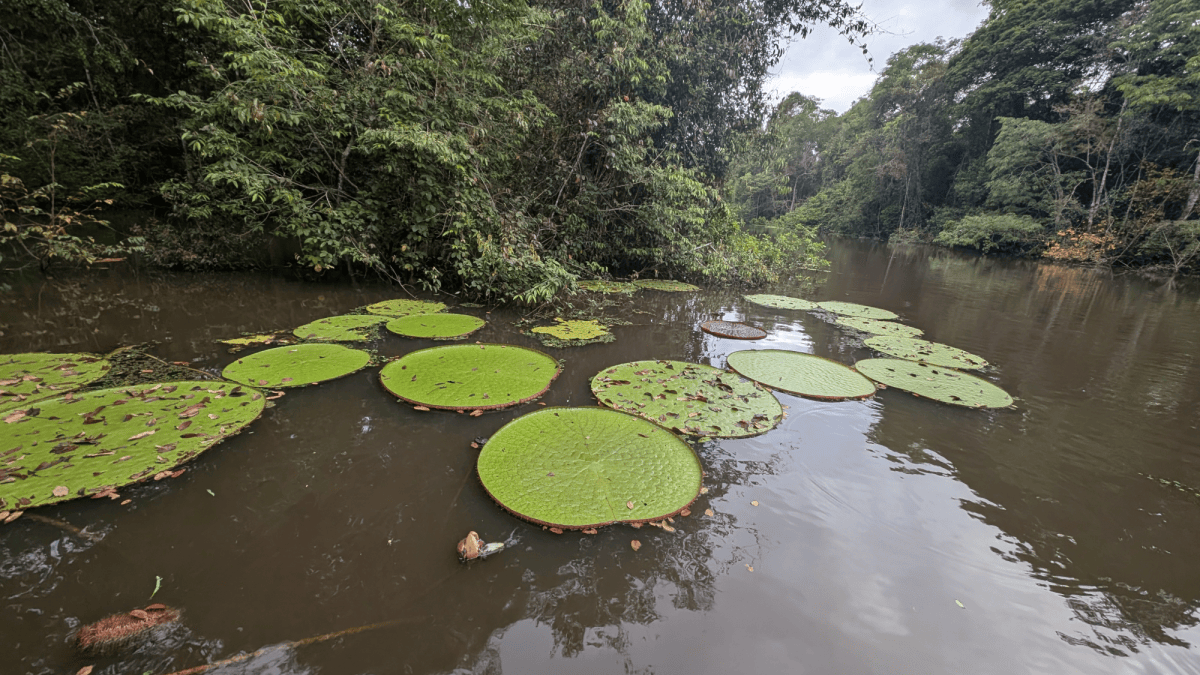
A new water lily spotted from spaceEen nieuwe waterlelie ontdekt vanuit de ruimteUn nouveau nénuphar repéré depuis l’espace
Popular Science · 18 October 2026, at 19:29
When Colorado plant grower Jeremiah Harris shared photos of giant water lilies in Colombia, botanist Carlos Magdalena realized they might belong to an unknown species. Satellite images helped researchers locate the plants, but their expedition initially found no flowers needed to identify them. Indigenous guides, including Tucano boat captain Gustavo Melo, led the team to a blooming specimen just hours before their flight home, enabling the scientific description of Victoria colombiana. With only an estimated 30 to 50 plants in the wild, researchers are now working to understand and protect this remarkable lily.Toen plantenliefhebber Jeremiah Harris uit Colorado foto’s deelde van reusachtige waterlelies in Colombia, vermoedde botanicus Carlos Magdalena dat het om een onbekende soort ging. Satellietbeelden hielpen de onderzoekers de planten op te sporen, maar tijdens hun expeditie vonden ze aanvankelijk geen bloemen die nodig waren om de soort te identificeren. Inheemse gidsen, onder wie de Tucano-bootkapitein Gustavo Melo, leidden het team naar een bloeiend exemplaar, slechts enkele uren voor hun terugvlucht, waardoor Victoria colombiana wetenschappelijk kon worden beschreven. Omdat er naar schatting maar 30 tot 50 planten in het wild groeien, werken onderzoekers nu aan een beter begrip van deze bijzondere waterlelie en aan haar bescherming.Lorsque Jeremiah Harris, un cultivateur de plantes du Colorado, a partagé des photos de gigantesques nénuphars en Colombie, le botaniste Carlos Magdalena a soupçonné qu’il s’agissait d’une espèce inconnue. Les images satellites ont aidé les chercheurs à localiser les plantes, mais leur expédition n’a d’abord trouvé aucune fleur, indispensable pour identifier l’espèce. Des guides autochtones, dont Gustavo Melo, capitaine de bateau tucano, ont conduit l’équipe jusqu’à un spécimen en fleurs quelques heures avant leur vol de retour, permettant ainsi la description scientifique de Victoria colombiana. Comme il n’en resterait que 30 à 50 à l’état sauvage, les chercheurs s’emploient désormais à mieux connaître et protéger ce nénuphar remarquable.