How 28,000 rubber ducks mapped the ocean's currentsHoe 28.000 badeendjes de oceaanstromingen in kaart brachtenComment 28 000 canards en plastique ont révélé les courants océaniques
Upworthy · 21 October 2026, at 12:04
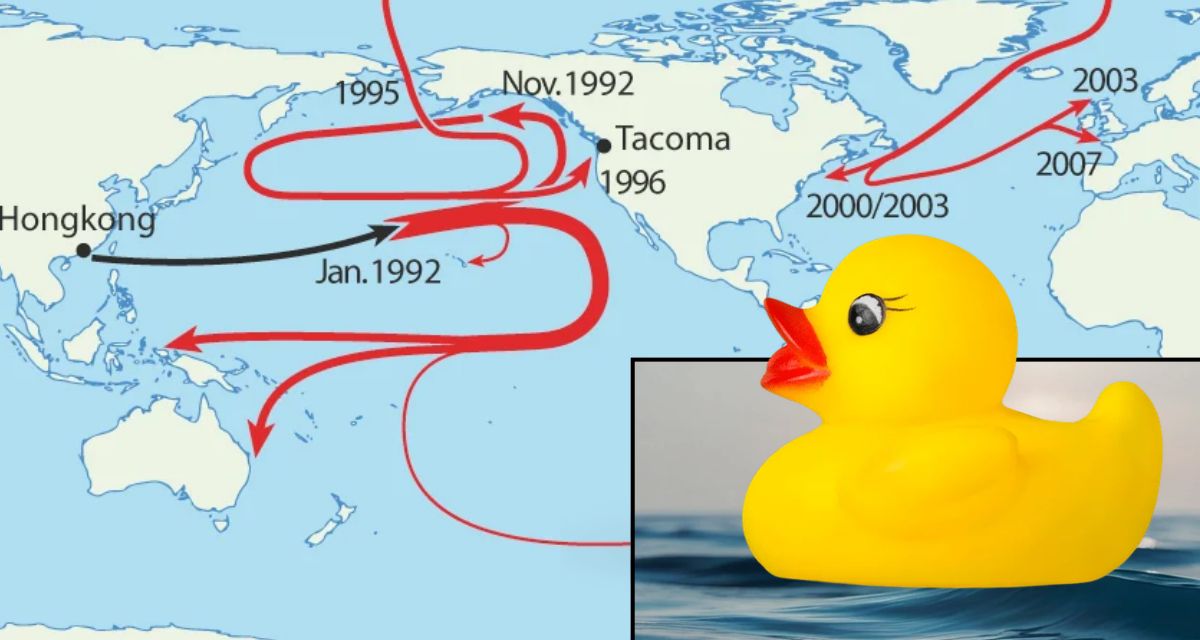
In 1992, a storm sent 28,800 bath toys tumbling from a cargo ship into the North Pacific, setting off an extraordinary journey. Oceanographers used reports of the toys washing ashore to track currents across the Pacific, into the Arctic, and eventually toward the North Atlantic. Their travels helped researchers test ocean-current models and showed just how far floating objects can go. And here's the thing: the toys also offered a real-world lesson in how plastic pollution spreads and lingers at sea. What began as an accident became a remarkable source of knowledge about our oceans.In 1992 liet een storm 28.800 badspeeltjes van een vrachtschip in de noordelijke Stille Oceaan vallen, waarna ze aan een buitengewone reis begonnen. Oceanografen gebruikten meldingen van aangespoelde speeltjes om stromingen te volgen door de Stille Oceaan, het Noordpoolgebied en uiteindelijk richting de noordelijke Atlantische Oceaan. Hun tocht hielp onderzoekers oceaanmodellen te toetsen en liet zien hoe ver drijvende voorwerpen kunnen reizen. En dit is bijzonder: de speeltjes maakten ook duidelijk hoe plasticvervuiling zich verspreidt en in zee blijft rondzwerven. Wat begon als een ongeluk, leverde zo waardevolle kennis over onze oceanen op.En 1992, une tempête a précipité 28 800 jouets de bain d'un cargo dans le Pacifique Nord, les lançant dans un voyage extraordinaire. Les océanographes se sont appuyés sur les signalements de jouets échoués pour suivre les courants à travers le Pacifique, jusqu'en Arctique, puis vers l'Atlantique Nord. Leur périple a permis aux chercheurs de tester leurs modèles des courants océaniques et de découvrir jusqu'où peuvent dériver des objets flottants. Et voici ce qui est étonnant : ces jouets ont aussi montré concrètement comment la pollution plastique se disperse et persiste en mer. Un accident est ainsi devenu une source remarquable de connaissances sur nos océans.