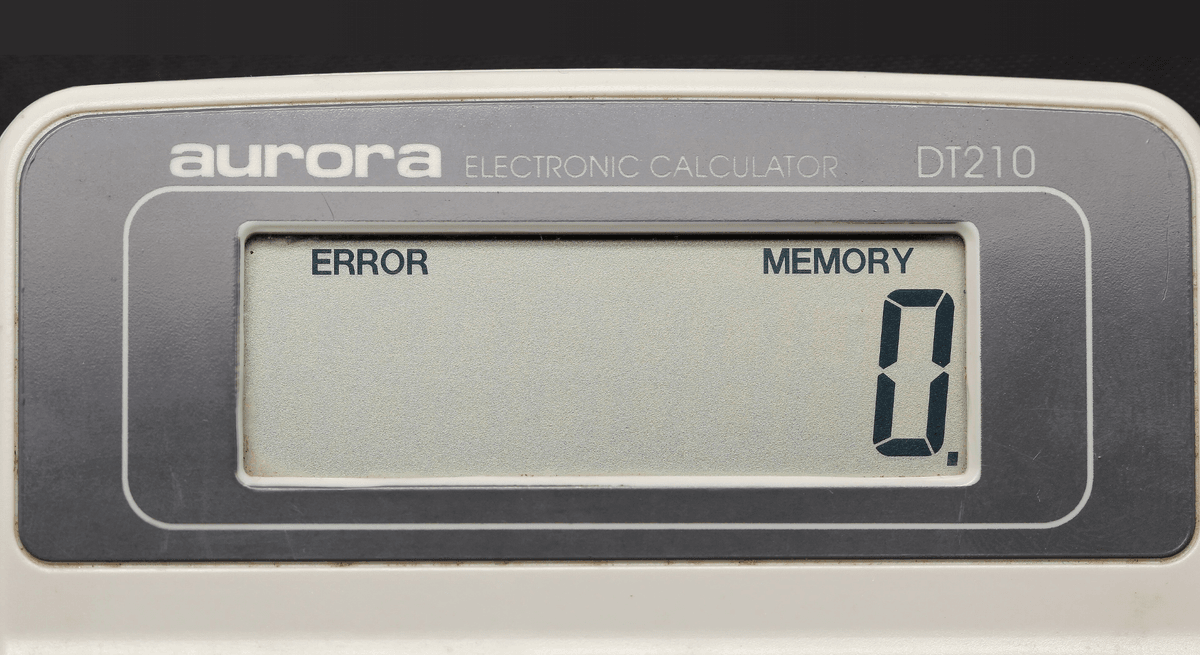
The most impractical calculator in the world has only two buttonsDe onpraktischste rekenmachine ter wereld heeft maar twee knoppenLa calculatrice la moins pratique du monde n’a que deux boutons
Scientific American · 3 November 2026, at 22:35
Could a scientific calculator work with just two buttons? Physicist Andrzej Odrzywołek shows that a single number, 1, and one operation, eml(x,y) = exp(x) − ln(y), can be used to build familiar functions such as square roots, tangents and exponentiation. A proof-checking program has verified the mathematical reasoning, turning this curious idea into a rigorously checked result. And here's the thing: although calculators make calculations far easier, the old-fashioned work of consulting logarithm tables once helped astronomers spot the pattern behind Benford’s law.Zou een wetenschappelijke rekenmachine met slechts twee knoppen kunnen werken? Natuurkundige Andrzej Odrzywołek laat zien dat je met één getal, 1, en één bewerking, eml(x,y) = exp(x) − ln(y), bekende functies zoals vierkantswortels, tangens en machtsverheffen kunt opbouwen. Een programma voor formele bewijscontrole heeft de wiskundige redenering nagekeken en bevestigd. En juist dat is zo boeiend: rekenmachines maken berekeningen een stuk eenvoudiger, maar het ouderwetse bladeren in logaritmetabellen hielp ooit astronomen het patroon achter de wet van Benford te ontdekken.Une calculatrice scientifique pourrait-elle fonctionner avec seulement deux boutons ? Le physicien Andrzej Odrzywołek montre qu’un seul nombre, 1, et une seule opération, eml(x,y) = exp(x) − ln(y), permettent de construire des fonctions courantes comme les racines carrées, les tangentes et les puissances. Un programme de vérification formelle a contrôlé le raisonnement mathématique et confirmé sa validité. Et c’est là que l’histoire devient passionnante : les calculatrices facilitent les calculs, mais autrefois, consulter des tables de logarithmes a aidé des astronomes à repérer le motif à l’origine de la loi de Benford.