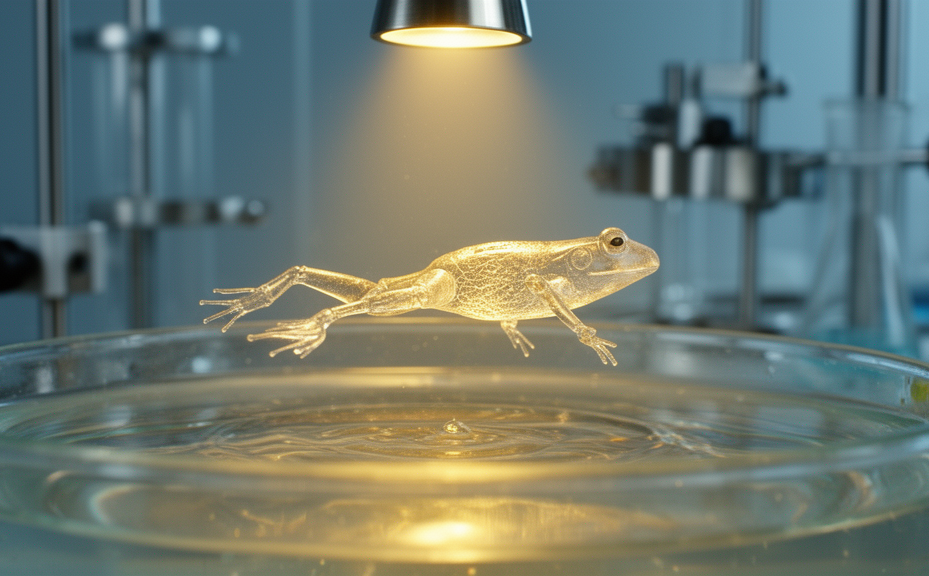
A 3D-printed robotic frog swims with artificial musclesEen 3D-geprinte robotkikker zwemt met kunstspierenUne grenouille robot imprimée en 3D nage grâce à des muscles artificiels
Rzeczpospolita Poland · 13 November 2026, at 21:02
Researchers in Denmark and Luxembourg have created a tiny, frog-shaped robot that swims without a motor, battery or wires. Its six artificial muscles contract when warmed by near-infrared light, pushing water backwards and propelling the robot forwards at about four centimetres per minute. And here's the thing: the team printed its soft materials together, refining how the muscles work with the silicone body. The findings could help guide future soft robots for environmental monitoring or search-and-rescue missions, though they still need a power source independent of external light.Onderzoekers uit Denemarken en Luxemburg maakten een kleine robot in de vorm van een kikker die zwemt zonder motor, batterij of draden. De zes kunstspieren trekken samen wanneer ze worden verwarmd met nabij-infrarood licht, duwen water naar achteren en stuwen de robot met ongeveer vier centimeter per minuut vooruit. En dit is het bijzondere: het team printte de zachte materialen samen en verfijnde hoe de spieren samenwerken met het siliconen lichaam. De bevindingen kunnen helpen bij de ontwikkeling van zachte robots voor milieumonitoring of zoek- en reddingsacties, al hebben ze nog een energiebron nodig die niet afhankelijk is van extern licht.Des chercheurs danois et luxembourgeois ont créé un petit robot en forme de grenouille qui nage sans moteur, batterie ni câbles. Ses six muscles artificiels se contractent lorsqu’ils sont chauffés par une lumière proche infrarouge, repoussent l’eau et font avancer le robot à environ quatre centimètres par minute. Et voici ce qui est remarquable : l’équipe a imprimé les matériaux souples ensemble et perfectionné leur interaction avec le corps en silicone. Ces résultats pourraient contribuer à de futurs robots souples destinés à la surveillance de l’environnement ou aux opérations de recherche et de sauvetage, même qu’il leur faut encore une alimentation indépendante d’une source lumineuse externe.