Naming your feelings can be harder than you think. This simple tool can helpJe gevoelens benoemen is moeilijker dan je denkt. Dit eenvoudige hulpmiddel kan helpenNommer ses émotions est plus difficile qu’on ne le pense. Cet outil simple peut aider
The Guardian Europe · 16 November 2026, at 21:35
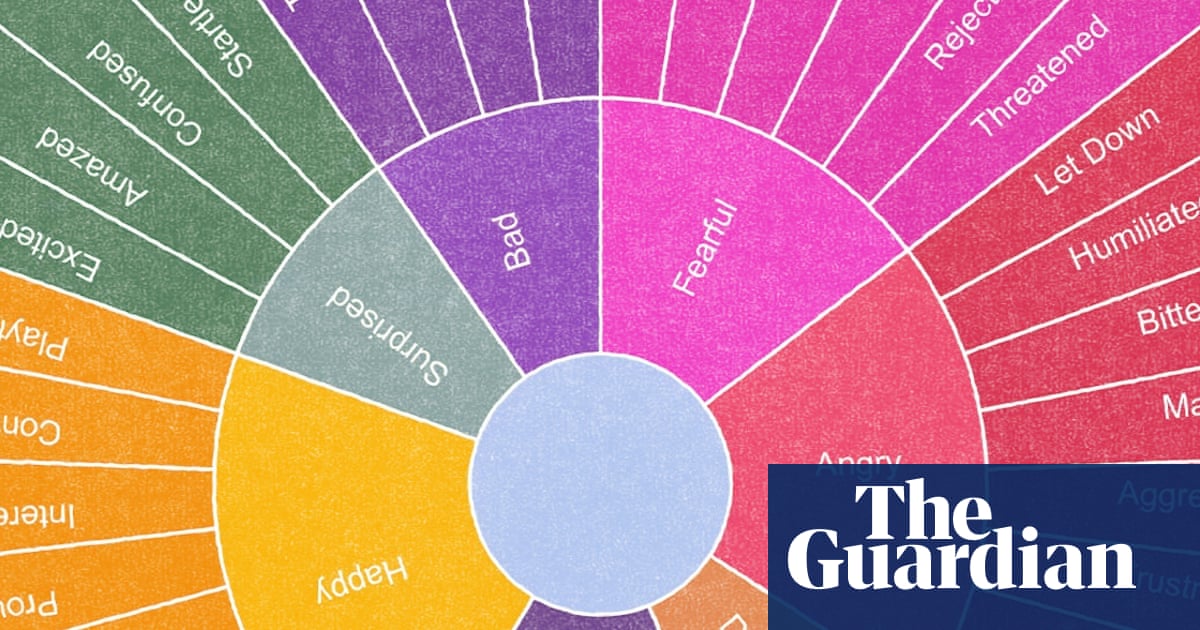
Putting a name to a feeling can be surprisingly difficult: around one in 10 people struggle significantly to identify their emotions. The feelings wheel, created by psychologist Gloria Willcox in the early 1980s, helps users move from broad labels such as “sad” to more precise descriptions. This skill, known as emotional granularity, can offer clues about why we feel a certain way and what might help, and research links it with better mental health and social functioning. Experts are still exploring exactly why, but more specific emotional words can give us useful information for responding to what we need.Een gevoel benoemen blijkt verrassend moeilijk: ongeveer één op de tien mensen heeft grote moeite om de eigen emoties te herkennen. Het gevoelenswiel, begin jaren tachtig ontwikkeld door psycholoog Gloria Willcox, helpt om van brede labels zoals ‘verdrietig’ naar preciezere omschrijvingen te gaan. Deze vaardigheid, emotionele fijnmazigheid genoemd, kan inzicht geven in waarom we ons op een bepaalde manier voelen en wat ons kan helpen; onderzoek brengt haar ook in verband met een betere mentale gezondheid en sterkere sociale vaardigheden. Deskundigen onderzoeken nog waarom dat precies zo is, maar specifiekere woorden voor emoties kunnen ons nuttige aanwijzingen geven over wat we nodig hebben.Mettre un mot sur un sentiment peut être étonnamment difficile : environ une personne sur dix a beaucoup de mal à identifier ses émotions. La roue des émotions, créée par la psychologue Gloria Willcox au début des années 1980, aide à passer de termes généraux comme « triste » à des descriptions plus précises. Cette capacité, appelée granularité émotionnelle, peut aider à comprendre pourquoi nous ressentons quelque chose et ce qui pourrait nous être utile ; la recherche l’associe aussi à une meilleure santé mentale et à de meilleures relations sociales. Les spécialistes cherchent encore à expliquer exactement pourquoi, mais des mots plus précis pour décrire nos émotions peuvent nous aider à mieux cerner nos besoins.